Bioinformatics Scientists
Conduct research using bioinformatics theory and methods in areas such as pharmaceuticals, medical technology, biotechnology, computational biology, proteomics, computer information science, biology and medical informatics. May design databases and develop algorithms for processing and analyzing genomic information, or other biological information.
How AI Impacts Each Task
20 tasks analyzed
Develop new software applications or customize existing applications to meet specific scientific project needs.
Communicate research results through conference presentations, scientific publications, or project reports.
Create novel computational approaches and analytical tools as required by research goals.
Consult with researchers to analyze problems, recommend technology-based solutions, or determine computational strategies.
Analyze large molecular datasets, such as raw microarray data, genomic sequence data, or proteomics data, for clinical or basic research purposes.
Keep abreast of new biochemistries, instrumentation, or software by reading scientific literature and attending professional conferences.
Develop data models and databases.
Compile data for use in activities, such as gene expression profiling, genome annotation, or structural bioinformatics.
Design and apply bioinformatics algorithms including unsupervised and supervised machine learning, dynamic programming, or graphic algorithms.
Manipulate publicly accessible, commercial, or proprietary genomic, proteomic, or post-genomic databases.
Direct the work of technicians and information technology staff applying bioinformatics tools or applications in areas such as proteomics, transcriptomics, metabolomics, or clinical bioinformatics.
Provide statistical and computational tools for biologically based activities, such as genetic analysis, measurement of gene expression, or gene function determination.
Improve user interfaces to bioinformatics software and databases.
Create or modify web-based bioinformatics tools.
Confer with departments, such as marketing, business development, or operations, to coordinate product development or improvement.
Recommend new systems and processes to improve operations.
Instruct others in the selection and use of bioinformatics tools.
Collaborate with software developers in the development and modification of commercial bioinformatics software.
Test new and updated bioinformatics tools and software.
Prepare summary statistics of information regarding human genomes.
| Task | AI Capability | Risk | Time % | |
|---|---|---|---|---|
| Develop new software applications or customize existing applications to meet specific scientific project needs. | 65.22Observed | 53.1% | 8% | |
| Communicate research results through conference presentations, scientific publications, or project reports. | 63.02Observed | 40.2% | 6% | |
| Create novel computational approaches and analytical tools as required by research goals. | 55Estimated | 49.0% | 8% | |
| Consult with researchers to analyze problems, recommend technology-based solutions, or determine computational strategies. | 67.42Observed | 42.0% | 7% | |
| Analyze large molecular datasets, such as raw microarray data, genomic sequence data, or proteomics data, for clinical or basic research purposes. | 63.9Observed | 52.6% | 10% | |
| Keep abreast of new biochemistries, instrumentation, or software by reading scientific literature and attending professional conferences. | 65Estimated | 53.0% | 5% | |
| Develop data models and databases. | 63.45Observed | 52.4% | 6% | |
| Compile data for use in activities, such as gene expression profiling, genome annotation, or structural bioinformatics. | 50.3Observed | 69.3% | 5% | |
| Design and apply bioinformatics algorithms including unsupervised and supervised machine learning, dynamic programming, or graphic algorithms. | 54.7Observed | 48.9% | 8% | |
| Manipulate publicly accessible, commercial, or proprietary genomic, proteomic, or post-genomic databases. | 61.32Observed | 73.7% | 5% | |
| Direct the work of technicians and information technology staff applying bioinformatics tools or applications in areas such as proteomics, transcriptomics, metabolomics, or clinical bioinformatics. | 20Estimated | 23.0% | 5% | |
| Provide statistical and computational tools for biologically based activities, such as genetic analysis, measurement of gene expression, or gene function determination. | 55.65Observed | 49.3% | 5% | |
| Improve user interfaces to bioinformatics software and databases. | 70Estimated | 55.0% | 3% | |
| Create or modify web-based bioinformatics tools. | 56.65Observed | 49.7% | 4% | |
| Confer with departments, such as marketing, business development, or operations, to coordinate product development or improvement. | 54.4Observed | 36.8% | 3% | |
| Recommend new systems and processes to improve operations. | 68.6Observed | 54.4% | 2% | |
| Instruct others in the selection and use of bioinformatics tools. | 59.65Observed | 38.9% | 3% | |
| Collaborate with software developers in the development and modification of commercial bioinformatics software. | 35Estimated | 29.0% | 3% | |
| Test new and updated bioinformatics tools and software. | 45.45Observed | 67.4% | 2% | |
| Prepare summary statistics of information regarding human genomes. | 52.88Observed | 70.4% | 2% |
Skill Impact Analysis
AI-Vulnerable Skills (6)
High reliance on Mathematics is a risk area. Consider developing complementary AI-resistant skills to maintain value.
High reliance on Reading Comprehension is a risk area. Consider developing complementary AI-resistant skills to maintain value.
High reliance on Information Ordering is a risk area. Consider developing complementary AI-resistant skills to maintain value.
High reliance on Mathematics is a risk area. Consider developing complementary AI-resistant skills to maintain value.
High reliance on Memorization is a risk area. Consider developing complementary AI-resistant skills to maintain value.
Programming is AI-vulnerable but has moderate importance in this role. AI tools may handle this; focus on higher-value skills.
AI-Resistant Skills (11)
Adaptability/Flexibility is AI-resistant — strengthening this skill provides durable career protection.
Complex Problem Solving is AI-resistant — strengthening this skill provides durable career protection.
Leadership is AI-resistant — strengthening this skill provides durable career protection.
Social Perceptiveness is AI-resistant — strengthening this skill provides durable career protection.
Coordination is AI-resistant — strengthening this skill provides durable career protection.
Instructing is AI-resistant — strengthening this skill provides durable career protection.
Persuasion is AI-resistant — strengthening this skill provides durable career protection.
Service Orientation is AI-resistant — strengthening this skill provides durable career protection.
Recommended Courses
Courses matched to Bioinformatics Scientists skill gaps, ranked by relevance to your displacement risk profile.
Get personalized recommendations. Answer a few questions about your experience and skills to get course suggestions tailored specifically to you.
Upskill to Reduce Risk
Courses addressing your most AI-vulnerable skills
SQL Fundamentals Skill Track
by DataCamp
Estimated Impact
AI-Augmentation Tools
Learn to work alongside AI and boost your productivity
Creative Writing Specialization
by Wesleyan University
Estimated Impact
Strengthen Your Edge
Double down on skills AI can't replicate
Design Patterns in C# and .NET
by Pluralsight
Estimated Impact
We may earn a commission when you enroll through our links, at no extra cost to you. This helps fund the Takeover Tracker.
Risk reduction and salary impact are estimates based on skill gap analysis, course relevance, and labor market data. Actual results vary by individual circumstance.
Score History
Risk score over 2 scoring runs
overall change
Education & Training
Percentage of workers at each education and training level
Education Level
Prior Experience Needed
Work experience required to enter this job
Training Provided After Hiring
How long it typically takes to learn on the job
Related News
Recent articles about AI affecting this occupation

AI's Role as Research Assistant Calls into Question Ownership of Scientific Discoveries
As AI models advance to generating genuinely novel scientific results, the research sector faces a looming intellectual property crisis. Determining whether credit belongs to the human researcher or the AI company remains unresolved.
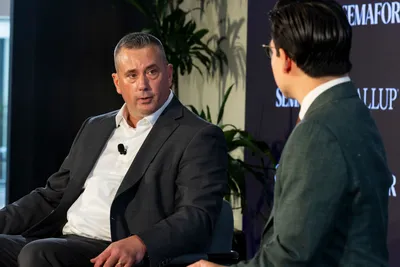
Google-Backed Isomorphic Labs Keeps AI Drug Discovery In-House
Chris Butler confirmed that the Google-backed company's proprietary AI models for drug discovery remain strictly internal. The decision highlights how fiercely biotech firms are guarding the algorithms reshaping research roles.
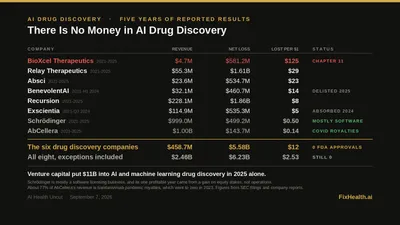
AI Drug Discovery Sector Bleeds $5.5B With Zero Approvals
Despite $5.58 billion in losses over five years, the industry hasn't produced a single approved AI-discovered drug. A recent failed Novartis Phase 3 trial proves that generating molecules isn't the bottleneck in pharmaceutical success.
Last scored March 14, 2026 · Based on BLS employment data and O*NET task analysis