Environmental Restoration Planners
Collaborate with field and biology staff to oversee the implementation of restoration projects and to develop new products. Process and synthesize complex scientific data into practical strategies for restoration, monitoring or management.
How AI Impacts Each Task
23 tasks analyzed
Collect and analyze data to determine environmental conditions and restoration needs.
Plan environmental restoration projects, using biological databases, environmental strategies, and planning software.
Develop and communicate recommendations for landowners to maintain or restore environmental conditions.
Communicate findings of environmental studies or proposals for environmental remediation to other restoration professionals.
Conduct site assessments to certify a habitat or to ascertain environmental damage or restoration needs.
Create habitat management or restoration plans, such as native tree restoration and weed control.
Supervise and provide technical guidance, training, or assistance to employees working in the field to restore habitats.
Develop environmental restoration project schedules and budgets.
Apply for permits required for the implementation of environmental remediation projects.
Create diagrams to communicate environmental remediation planning, using geographic information systems (GIS), computer-aided design (CAD), or other mapping or diagramming software.
Identify short- and long-term impacts of environmental remediation activities.
Provide technical direction on environmental planning to energy engineers, biologists, geologists, or other professionals working to develop restoration plans or strategies.
Conduct environmental impact studies to examine the ecological effects of pollutants, disease, human activities, nature, and climate change.
Conduct feasibility and cost-benefit studies for environmental remediation projects.
Review existing environmental remediation designs.
Create environmental models or simulations, using geographic information system (GIS) data and knowledge of particular ecosystems or ecological regions.
Develop natural resource management plans, using knowledge of environmental planning or state and federal environmental regulatory requirements.
Notify regulatory or permitting agencies of deviations from implemented remediation plans.
Identify environmental mitigation alternatives, ensuring compliance with applicable standards, laws, or regulations.
Inspect active remediation sites to ensure compliance with environmental or safety policies, standards, or regulations.
Develop environmental management or restoration plans for sites with power transmission lines, natural gas pipelines, fuel refineries, geothermal plants, wind farms, or solar farms.
Plan or supervise environmental studies to achieve compliance with environmental regulations in construction, modification, operation, acquisition, or divestiture of facilities such as power plants.
Write grants to obtain funding for restoration projects.
| Task | AI Capability | Risk | Time % | |
|---|---|---|---|---|
| Collect and analyze data to determine environmental conditions and restoration needs. | 60Estimated | 51.0% | 8% | |
| Plan environmental restoration projects, using biological databases, environmental strategies, and planning software. | 55Estimated | 49.0% | 8% | |
| Develop and communicate recommendations for landowners to maintain or restore environmental conditions. | 30Estimated | 27.0% | 5% | |
| Communicate findings of environmental studies or proposals for environmental remediation to other restoration professionals. | 35Estimated | 29.0% | 5% | |
| Conduct site assessments to certify a habitat or to ascertain environmental damage or restoration needs. | 35Estimated | 41.0% | 6% | |
| Create habitat management or restoration plans, such as native tree restoration and weed control. | 55Estimated | 49.0% | 6% | |
| Supervise and provide technical guidance, training, or assistance to employees working in the field to restore habitats. | 20Estimated | 23.0% | 5% | |
| Develop environmental restoration project schedules and budgets. | 87Estimated | 84.0% | 4% | |
| Apply for permits required for the implementation of environmental remediation projects. | 87Estimated | 84.0% | 3% | |
| Create diagrams to communicate environmental remediation planning, using geographic information systems (GIS), computer-aided design (CAD), or other mapping or diagramming software. | 72Estimated | 78.0% | 4% | |
| Identify short- and long-term impacts of environmental remediation activities. | 55Estimated | 49.0% | 4% | |
| Provide technical direction on environmental planning to energy engineers, biologists, geologists, or other professionals working to develop restoration plans or strategies. | 25Estimated | 25.0% | 4% | |
| Conduct environmental impact studies to examine the ecological effects of pollutants, disease, human activities, nature, and climate change. | 60Estimated | 51.0% | 5% | |
| Conduct feasibility and cost-benefit studies for environmental remediation projects. | 60Estimated | 51.0% | 4% | |
| Review existing environmental remediation designs. | 60Estimated | 51.0% | 3% | |
| Create environmental models or simulations, using geographic information system (GIS) data and knowledge of particular ecosystems or ecological regions. | 50Estimated | 47.0% | 4% | |
| Develop natural resource management plans, using knowledge of environmental planning or state and federal environmental regulatory requirements. | 65Estimated | 53.0% | 4% | |
| Notify regulatory or permitting agencies of deviations from implemented remediation plans. | 87Estimated | 84.0% | 2% | |
| Identify environmental mitigation alternatives, ensuring compliance with applicable standards, laws, or regulations. | 65Estimated | 53.0% | 4% | |
| Inspect active remediation sites to ensure compliance with environmental or safety policies, standards, or regulations. | 52Estimated | 70.0% | 4% | |
| Develop environmental management or restoration plans for sites with power transmission lines, natural gas pipelines, fuel refineries, geothermal plants, wind farms, or solar farms. | 48.52Observed | 46.4% | 3% | |
| Plan or supervise environmental studies to achieve compliance with environmental regulations in construction, modification, operation, acquisition, or divestiture of facilities such as power plants. | 50Estimated | 47.0% | 2% | |
| Write grants to obtain funding for restoration projects. | 70Estimated | 55.0% | 3% |
Skill Impact Analysis
AI-Vulnerable Skills (6)
High reliance on Reading Comprehension is a risk area. Consider developing complementary AI-resistant skills to maintain value.
High reliance on Information Ordering is a risk area. Consider developing complementary AI-resistant skills to maintain value.
High reliance on Mathematics is a risk area. Consider developing complementary AI-resistant skills to maintain value.
Mathematics is AI-vulnerable but has moderate importance in this role. AI tools may handle this; focus on higher-value skills.
Memorization is AI-vulnerable but has moderate importance in this role. AI tools may handle this; focus on higher-value skills.
Programming is AI-vulnerable but has moderate importance in this role. AI tools may handle this; focus on higher-value skills.
AI-Resistant Skills (11)
Adaptability/Flexibility is AI-resistant — strengthening this skill provides durable career protection.
Leadership is AI-resistant — strengthening this skill provides durable career protection.
Complex Problem Solving is AI-resistant — strengthening this skill provides durable career protection.
Coordination is AI-resistant — strengthening this skill provides durable career protection.
Social Perceptiveness is AI-resistant — strengthening this skill provides durable career protection.
Persuasion is AI-resistant — strengthening this skill provides durable career protection.
Service Orientation is AI-resistant — strengthening this skill provides durable career protection.
Negotiation is AI-resistant — strengthening this skill provides durable career protection.
Recommended Courses
Courses matched to Environmental Restoration Planners skill gaps, ranked by relevance to your displacement risk profile.
Get personalized recommendations. Answer a few questions about your experience and skills to get course suggestions tailored specifically to you.
Upskill to Reduce Risk
Courses addressing your most AI-vulnerable skills
SQL Fundamentals Skill Track
by DataCamp
Estimated Impact
AI-Augmentation Tools
Learn to work alongside AI and boost your productivity
Creative Writing Specialization
by Wesleyan University
Estimated Impact
Strengthen Your Edge
Double down on skills AI can't replicate
Leading People and Teams Specialization
by University of Michigan
Estimated Impact
We may earn a commission when you enroll through our links, at no extra cost to you. This helps fund the Takeover Tracker.
Risk reduction and salary impact are estimates based on skill gap analysis, course relevance, and labor market data. Actual results vary by individual circumstance.
Score History
Risk score over 2 scoring runs
overall change
Education & Training
Percentage of workers at each education and training level
Prior Experience Needed
Work experience required to enter this job
Training Provided After Hiring
How long it typically takes to learn on the job
Related News
Recent articles about AI affecting this occupation

UT Law Director on AI's Legal Impact and Workforce Disruption
Kevin Frazier, director of UT's AI Innovation and Law program, warns that current consumer protection laws are inadequate for the coming wave of workforce disruption. He argues that new legal frameworks are urgently needed.
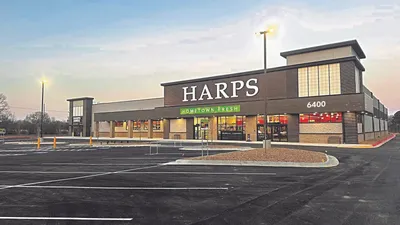
Grocery chain Harps appoints its first Director of AI to drive automation
Will McDoniel will lead the regional grocer's new artificial intelligence division, tasked with identifying operational efficiencies. The newly created executive role signals the rapid expansion of AI strategy into traditional retail sectors.

CMLS creates new advocacy director role to navigate AI and compensation debates.
Cameron Kinzer will lead federal and local engagement for the Council of Multiple Listing Services, specifically addressing how artificial intelligence impacts industry compensation and privacy. The newly created position highlights growing regulatory concerns around AI in real estate.
Last scored March 14, 2026 · Based on BLS employment data and O*NET task analysis