Logistics Analysts
Analyze product delivery or supply chain processes to identify or recommend changes. May manage route activity including invoicing, electronic bills, and shipment tracing.
How AI Impacts Each Task
31 tasks analyzed
Maintain databases of logistics information.
Interpret data on logistics elements, such as availability, maintainability, reliability, supply chain management, strategic sourcing or distribution, supplier management, or transportation.
Provide ongoing analyses in areas such as transportation costs, parts procurement, back orders, or delivery processes.
Develop or maintain payment systems to ensure accuracy of vendor payments.
Prepare reports on logistics performance measures.
Confer with logistics management teams to determine ways to optimize service levels, maintain supply-chain efficiency, or minimize cost.
Remotely monitor the flow of vehicles or inventory, using Web-based logistics information systems to track vehicles or containers.
Track product flow from origin to final delivery.
Recommend improvements to existing or planned logistics processes.
Enter logistics-related data into databases.
Develop or maintain models for logistics uses, such as cost estimating or demand forecasting.
Review procedures, such as distribution or inventory management, to ensure maximum efficiency or minimum cost.
Apply analytic methods or tools to understand, predict, or control logistics operations or processes.
Monitor inventory transactions at warehouse facilities to assess receiving, storage, shipping, or inventory integrity.
Analyze logistics data, using methods such as data mining, data modeling, or cost or benefit analysis.
Maintain logistics records in accordance with corporate policies.
Develop or maintain freight rate databases for use by supply chain departments to determine the most economical modes of transportation.
Compute reporting metrics, such as on-time delivery rates, order fulfillment rates, or inventory turns.
Manage systems to ensure that pricing structures adequately reflect logistics costing.
Write or revise standard operating procedures for logistics processes.
Communicate with or monitor service providers, such as ocean carriers, air freight forwarders, global consolidators, customs brokers, or trucking companies.
Monitor industry standards, trends, or practices to identify developments in logistics planning or execution.
Reorganize shipping schedules to consolidate loads, maximize vehicle usage, or limit the movement of empty vehicles or containers.
Identify opportunities for inventory reductions.
Contact potential vendors to determine material availability.
Determine packaging requirements.
Route or reroute drivers in real time with remote route navigation software, satellite linkup systems, or global positioning systems (GPS) to improve operational efficiencies.
Arrange for sale or lease of excess storage or transport capacity to minimize losses or inefficiencies associated with empty space.
Contact carriers for rates or schedules.
Compare locations or environmental policies of carriers or suppliers to make transportation decisions with lower environmental impact.
Enter carbon-output or environmental-impact data into spreadsheets or environmental management or auditing software programs.
| Task | AI Capability | Risk | Time % | |
|---|---|---|---|---|
| Maintain databases of logistics information. | 50Observed | 69.2% | 4% | |
| Interpret data on logistics elements, such as availability, maintainability, reliability, supply chain management, strategic sourcing or distribution, supplier management, or transportation. | 39.95Observed | 43.0% | 6% | |
| Provide ongoing analyses in areas such as transportation costs, parts procurement, back orders, or delivery processes. | 60Estimated | 51.0% | 6% | |
| Develop or maintain payment systems to ensure accuracy of vendor payments. | 53.73Observed | 70.7% | 3% | |
| Prepare reports on logistics performance measures. | 61.22Observed | 73.7% | 4% | |
| Confer with logistics management teams to determine ways to optimize service levels, maintain supply-chain efficiency, or minimize cost. | 30Estimated | 27.0% | 4% | |
| Remotely monitor the flow of vehicles or inventory, using Web-based logistics information systems to track vehicles or containers. | 48.32Observed | 68.5% | 3% | |
| Track product flow from origin to final delivery. | 44.33Observed | 66.9% | 3% | |
| Recommend improvements to existing or planned logistics processes. | 55Estimated | 49.0% | 5% | |
| Enter logistics-related data into databases. | 33.58Observed | 62.6% | 4% | |
| Develop or maintain models for logistics uses, such as cost estimating or demand forecasting. | 75Estimated | 57.0% | 5% | |
| Review procedures, such as distribution or inventory management, to ensure maximum efficiency or minimum cost. | 55Estimated | 49.0% | 4% | |
| Apply analytic methods or tools to understand, predict, or control logistics operations or processes. | 65Estimated | 53.0% | 5% | |
| Monitor inventory transactions at warehouse facilities to assess receiving, storage, shipping, or inventory integrity. | 90Estimated | 85.2% | 3% | |
| Analyze logistics data, using methods such as data mining, data modeling, or cost or benefit analysis. | 70Estimated | 55.0% | 5% | |
| Maintain logistics records in accordance with corporate policies. | 35.48Observed | 63.4% | 3% | |
| Develop or maintain freight rate databases for use by supply chain departments to determine the most economical modes of transportation. | 92Estimated | 86.0% | 2% | |
| Compute reporting metrics, such as on-time delivery rates, order fulfillment rates, or inventory turns. | 95Estimated | 87.2% | 3% | |
| Manage systems to ensure that pricing structures adequately reflect logistics costing. | 60Estimated | 51.0% | 3% | |
| Write or revise standard operating procedures for logistics processes. | 65Estimated | 53.0% | 3% | |
| Communicate with or monitor service providers, such as ocean carriers, air freight forwarders, global consolidators, customs brokers, or trucking companies. | 40Estimated | 31.0% | 3% | |
| Monitor industry standards, trends, or practices to identify developments in logistics planning or execution. | 56.25Observed | 49.5% | 2% | |
| Reorganize shipping schedules to consolidate loads, maximize vehicle usage, or limit the movement of empty vehicles or containers. | 75Estimated | 57.0% | 3% | |
| Identify opportunities for inventory reductions. | 70Estimated | 55.0% | 2% | |
| Contact potential vendors to determine material availability. | 45Estimated | 33.0% | 2% | |
| Determine packaging requirements. | 44.57Observed | 67.0% | 2% | |
| Route or reroute drivers in real time with remote route navigation software, satellite linkup systems, or global positioning systems (GPS) to improve operational efficiencies. | 95Estimated | 87.2% | 2% | |
| Arrange for sale or lease of excess storage or transport capacity to minimize losses or inefficiencies associated with empty space. | 30Estimated | 27.0% | 2% | |
| Contact carriers for rates or schedules. | 90Estimated | 85.2% | 2% | |
| Compare locations or environmental policies of carriers or suppliers to make transportation decisions with lower environmental impact. | 60Estimated | 51.0% | 2% | |
| Enter carbon-output or environmental-impact data into spreadsheets or environmental management or auditing software programs. | 95Estimated | 87.2% | 5% |
Skill Impact Analysis
AI-Vulnerable Skills (6)
High reliance on Reading Comprehension is a risk area. Consider developing complementary AI-resistant skills to maintain value.
High reliance on Information Ordering is a risk area. Consider developing complementary AI-resistant skills to maintain value.
High reliance on Mathematics is a risk area. Consider developing complementary AI-resistant skills to maintain value.
High reliance on Mathematics is a risk area. Consider developing complementary AI-resistant skills to maintain value.
Memorization is AI-vulnerable but has moderate importance in this role. AI tools may handle this; focus on higher-value skills.
Programming is AI-vulnerable but has moderate importance in this role. AI tools may handle this; focus on higher-value skills.
AI-Resistant Skills (11)
Adaptability/Flexibility is AI-resistant — strengthening this skill provides durable career protection.
Leadership is AI-resistant — strengthening this skill provides durable career protection.
Complex Problem Solving is AI-resistant — strengthening this skill provides durable career protection.
Coordination is AI-resistant — strengthening this skill provides durable career protection.
Social Perceptiveness is AI-resistant — strengthening this skill provides durable career protection.
Persuasion is AI-resistant — strengthening this skill provides durable career protection.
Service Orientation is AI-resistant — strengthening this skill provides durable career protection.
Negotiation is AI-resistant — strengthening this skill provides durable career protection.
Recommended Courses
Courses matched to Logistics Analysts skill gaps, ranked by relevance to your displacement risk profile.
Get personalized recommendations. Answer a few questions about your experience and skills to get course suggestions tailored specifically to you.
Upskill to Reduce Risk
Courses addressing your most AI-vulnerable skills
SQL Fundamentals Skill Track
by DataCamp
Estimated Impact
AI-Augmentation Tools
Learn to work alongside AI and boost your productivity
Systems Thinking In Practice
by The Open University
Estimated Impact
Strengthen Your Edge
Double down on skills AI can't replicate
Leading People and Teams Specialization
by University of Michigan
Estimated Impact
We may earn a commission when you enroll through our links, at no extra cost to you. This helps fund the Takeover Tracker.
Risk reduction and salary impact are estimates based on skill gap analysis, course relevance, and labor market data. Actual results vary by individual circumstance.
Alternate Career Paths
See all transitionsCost Estimators
37%Median salary: $77,070
Higher risk than 72% of other occupations
Logisticians
30%Median salary: $80,880
Higher risk than 37% of other occupations
Logistics Engineers
31%Median salary: $80,880
Higher risk than 47% of other occupations
Logistics Managers
32%Median salary: $102,010
Higher risk than 50% of other occupations
Purchasing Agents, Except Wholesale, Retail, and Farm Products
38%Higher risk than 74% of other occupations
Purchasing Managers
34%Median salary: $139,510
Higher risk than 60% of other occupations
Risk Management Specialists
38%Median salary: $80,190
Higher risk than 77% of other occupations
Storage and Distribution Managers
34%Median salary: $102,010
Higher risk than 62% of other occupations
Supply Chain Managers
32%Median salary: $136,550
Higher risk than 51% of other occupations
Transportation Managers
28%Median salary: $102,010
Higher risk than 29% of other occupations
Score History
Risk score over 3 scoring runs
overall change
Education & Training
Percentage of workers at each education and training level
Education Level
Prior Experience Needed
Work experience required to enter this job
Training Provided After Hiring
How long it typically takes to learn on the job
Related News
Recent articles about AI affecting this occupation

Supply Chain Leaders to Tackle AI and Workforce Automation
The 2026 NextGen Supply Chain Conference will feature dedicated sessions on how artificial intelligence is reshaping inventory and planning roles. Practitioners will share real-world data on managing the transition to automated logistics.
Logistics fleets adopt AI for load matching and network optimization
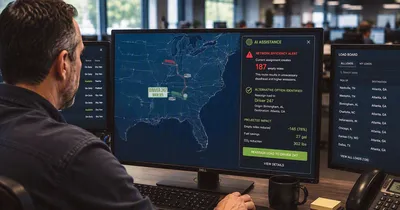
Transportation companies are integrating AI directly into their dispatch and routing decisions to optimize freight networks. This shift automates complex logistical planning tasks traditionally handled by human dispatchers and analysts.

How Supply Chain Execs Are Using AI to Automate Inefficient Processes
Leaders in logistics are targeting their most inefficient business processes for immediate AI integration. This targeted automation will likely shift workforce needs away from manual coordination toward system management.

Supply chain AI targets exception management, shifting planner roles
Automated systems are taking over routine disruption management, forcing supply chain planners to transition from manual triage to overseeing AI-driven corrective actions.
AI Maintenance Software Threatens to Disrupt Fleet Management Roles
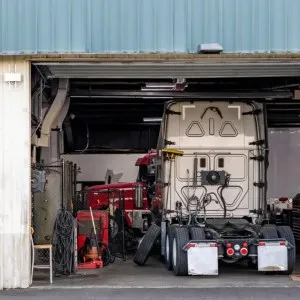
With non-fuel operating costs at record highs, Motive's new AI software automates maintenance tracking. This push into automated data sharing threatens to reduce the need for manual fleet coordinators and administrative logistics staff.
Last scored March 14, 2026 · Based on BLS employment data and O*NET task analysis