Software Developers, Systems Software
Research, design, develop, and test operating systems-level software, compilers, and network distribution software for medical, industrial, military, communications, aerospace, business, scientific, and general computing applications. Set operational specifications and formulate and analyze software requirements. May design embedded systems software. Apply principles and techniques of computer science, engineering, and mathematical analysis.
How AI Impacts Each Task
19 tasks analyzed
Modify existing software to correct errors, to adapt it to new hardware, or to upgrade interfaces and improve performance.
Monitor functioning of equipment to ensure system operates in conformance with specifications.
Develop or direct software system testing or validation procedures.
Direct software programming and development of documentation.
Consult with customers or other departments on project status, proposals, or technical issues, such as software system design or maintenance.
Analyze information to determine, recommend, and plan installation of a new system or modification of an existing system.
Consult with engineering staff to evaluate interface between hardware and software, develop specifications and performance requirements, or resolve customer problems.
Supervise and assign work to programmers, designers, technologists, technicians, or other engineering or scientific personnel.
Design or develop software systems, using scientific analysis and mathematical models to predict and measure outcome and consequences of design.
Advise customer about or perform maintenance of software system.
Prepare reports or correspondence concerning project specifications, activities, or status.
Confer with data processing or project managers to obtain information on limitations or capabilities for data processing projects.
Store, retrieve, and manipulate data for analysis of system capabilities and requirements.
Coordinate installation of software system.
Train users to use new or modified equipment.
Specify power supply requirements and configuration.
Evaluate factors such as reporting formats required, cost constraints, or need for security restrictions to determine hardware configuration.
Use microcontrollers to develop control signals, implement control algorithms, or measure process variables, such as temperatures, pressures, or positions.
Recommend purchase of equipment to control dust, temperature, or humidity in area of system installation.
| Task | AI Capability | Risk | Time % | |
|---|---|---|---|---|
| Modify existing software to correct errors, to adapt it to new hardware, or to upgrade interfaces and improve performance. | 60.05Observed | 51.0% | 18% | |
| Monitor functioning of equipment to ensure system operates in conformance with specifications. | 92Estimated | 86.0% | 4% | |
| Develop or direct software system testing or validation procedures. | 52.92Observed | 48.2% | 10% | |
| Direct software programming and development of documentation. | 61.4Observed | 39.6% | 8% | |
| Consult with customers or other departments on project status, proposals, or technical issues, such as software system design or maintenance. | 65.05Observed | 41.0% | 8% | |
| Analyze information to determine, recommend, and plan installation of a new system or modification of an existing system. | 54.47Observed | 48.8% | 7% | |
| Consult with engineering staff to evaluate interface between hardware and software, develop specifications and performance requirements, or resolve customer problems. | 62.5Observed | 40.0% | 6% | |
| Supervise and assign work to programmers, designers, technologists, technicians, or other engineering or scientific personnel. | 15Estimated | 21.0% | 4% | |
| Design or develop software systems, using scientific analysis and mathematical models to predict and measure outcome and consequences of design. | 69.5Observed | 54.8% | 8% | |
| Advise customer about or perform maintenance of software system. | 52.5Observed | 36.0% | 4% | |
| Prepare reports or correspondence concerning project specifications, activities, or status. | 49.25Observed | 68.9% | 4% | |
| Confer with data processing or project managers to obtain information on limitations or capabilities for data processing projects. | 30Estimated | 27.0% | 4% | |
| Store, retrieve, and manipulate data for analysis of system capabilities and requirements. | 41.77Observed | 65.9% | 3% | |
| Coordinate installation of software system. | 90Estimated | 85.2% | 2% | |
| Train users to use new or modified equipment. | 40Estimated | 31.0% | 2% | |
| Specify power supply requirements and configuration. | 64.65Observed | 52.9% | 2% | |
| Evaluate factors such as reporting formats required, cost constraints, or need for security restrictions to determine hardware configuration. | 54.52Observed | 48.8% | 2% | |
| Use microcontrollers to develop control signals, implement control algorithms, or measure process variables, such as temperatures, pressures, or positions. | 45Estimated | 45.0% | 2% | |
| Recommend purchase of equipment to control dust, temperature, or humidity in area of system installation. | 72Estimated | 78.0% | 2% |
Skill Impact Analysis
AI-Vulnerable Skills (6)
High reliance on Reading Comprehension is a risk area. Consider developing complementary AI-resistant skills to maintain value.
High reliance on Mathematics is a risk area. Consider developing complementary AI-resistant skills to maintain value.
High reliance on Information Ordering is a risk area. Consider developing complementary AI-resistant skills to maintain value.
High reliance on Mathematics is a risk area. Consider developing complementary AI-resistant skills to maintain value.
Programming is AI-vulnerable but has moderate importance in this role. AI tools may handle this; focus on higher-value skills.
Memorization is AI-vulnerable but has moderate importance in this role. AI tools may handle this; focus on higher-value skills.
AI-Resistant Skills (11)
Adaptability/Flexibility is AI-resistant — strengthening this skill provides durable career protection.
Leadership is AI-resistant — strengthening this skill provides durable career protection.
Complex Problem Solving is AI-resistant — strengthening this skill provides durable career protection.
Social Perceptiveness is AI-resistant — strengthening this skill provides durable career protection.
Coordination is AI-resistant — strengthening this skill provides durable career protection.
Service Orientation is AI-resistant — strengthening this skill provides durable career protection.
Persuasion is AI-resistant — strengthening this skill provides durable career protection.
Negotiation is AI-resistant — strengthening this skill provides durable career protection.
Recommended Courses
Courses matched to Software Developers, Systems Software skill gaps, ranked by relevance to your displacement risk profile.
Get personalized recommendations. Answer a few questions about your experience and skills to get course suggestions tailored specifically to you.
Upskill to Reduce Risk
Courses addressing your most AI-vulnerable skills
Google Technical Writing
by Google
Estimated Impact
AI-Augmentation Tools
Learn to work alongside AI and boost your productivity
Google UX Design Professional Certificate
by Google
Estimated Impact
Strengthen Your Edge
Double down on skills AI can't replicate
Inspired Leadership Through Emotional Intelligence
by Case Western Reserve University
Estimated Impact
We may earn a commission when you enroll through our links, at no extra cost to you. This helps fund the Takeover Tracker.
Risk reduction and salary impact are estimates based on skill gap analysis, course relevance, and labor market data. Actual results vary by individual circumstance.
Alternate Career Paths
See all transitionsComputer Network Architects
32%Higher risk than 52% of other occupations
Computer Programmers
34%Higher risk than 64% of other occupations
Computer Systems Analysts
33%Higher risk than 57% of other occupations
Computer Systems Engineers/Architects
34%Higher risk than 60% of other occupations
Database Administrators
35%Higher risk than 65% of other occupations
Geographic Information Systems Technicians
38%Higher risk than 76% of other occupations
Information Security Analysts
37%Higher risk than 70% of other occupations
Software Developers, Applications
36%Higher risk than 67% of other occupations
Software Quality Assurance Engineers and Testers
41%Higher risk than 83% of other occupations
Web Developers
43%Higher risk than 87% of other occupations
Score History
Risk score over 3 scoring runs
overall change
Education & Training
Percentage of workers at each education and training level
Education Level
Prior Experience Needed
Work experience required to enter this job
Training Provided After Hiring
How long it typically takes to learn on the job
Related News
Recent articles about AI affecting this occupation

Testing AI Coding Assistants: How Grok and Claude Impact Developer Workflows
A head-to-head test of xAI's Grok Build and Anthropic's Claude Code reveals how well these AI assistants retain context. Memory capabilities directly dictate how much time developers save versus spend correcting the AI.

AI Coding Speed Forces Developers to Redesign Testing Pipelines
Developers are generating code so rapidly using AI assistants that traditional continuous integration pipelines are breaking under the load. Engineering teams must now re-architect their testing infrastructure to keep pace.

Grok 4.7 Coding Agent Still Fails at Long-Running Development Tasks
Despite being designed to operate autonomously for hours, the latest iteration of the Grok coding agent continues to fail at complex software engineering tasks. This proves human developers remain essential for overseeing long-term coding projects.
AWS launches cheaper AI coding agent, escalating developer automation
Amazon Web Services released an open-source AI coding assistant that undercuts existing tools by 45%. The aggressive pricing accelerates the commoditization of entry-level programming tasks.
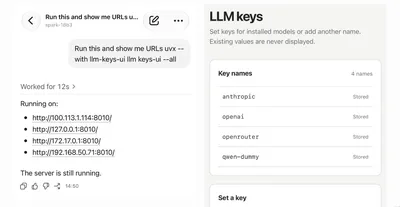
New Developer Tools Emerge to Manage Autonomous Coding Agents
Developer Simon Willison released a new plugin to manage API keys for autonomous coding agents. This highlights the rapid infrastructure growth supporting AI agents that write and execute code independently.
Last scored March 14, 2026 · Based on BLS employment data and O*NET task analysis