Computer Systems Engineers/Architects
Design and develop solutions to complex applications problems, system administration issues, or network concerns. Perform systems management and integration functions.
How AI Impacts Each Task
28 tasks analyzed
Verify stability, interoperability, portability, security, or scalability of system architecture.
Develop system engineering, software engineering, system integration, or distributed system architectures.
Collaborate with engineers or software developers to select appropriate design solutions or ensure the compatibility of system components.
Communicate with staff or clients to understand specific system requirements.
Identify system data, hardware, or software components required to meet user needs.
Research, test, or verify proper functioning of software patches and fixes.
Provide advice on project costs, design concepts, or design changes.
Perform security analyses of developed or packaged software components.
Provide technical guidance or support for the development or troubleshooting of systems.
Document design specifications, installation instructions, and other system-related information.
Communicate project information through presentations, technical reports, or white papers.
Define and analyze objectives, scope, issues, or organizational impact of information systems.
Monitor system operation to detect potential problems.
Design and conduct hardware or software tests.
Evaluate current or emerging technologies to consider factors such as cost, portability, compatibility, or usability.
Provide customers or installation teams guidelines for implementing secure systems.
Establish functional or system standards to address operational requirements, quality requirements, and design constraints.
Investigate system component suitability for specified purposes and make recommendations regarding component use.
Complete models and simulations, using manual or automated tools, to analyze or predict system performance under different operating conditions.
Develop or approve project plans, schedules, or budgets.
Develop efficient and effective system controllers.
Evaluate existing systems to determine effectiveness and suggest changes to meet organizational requirements.
Direct the analysis, development, and operation of complete computer systems.
Configure servers to meet functional specifications.
Develop application-specific software.
Perform ongoing hardware and software maintenance operations, including installing or upgrading hardware or software.
Direct the installation of operating systems, network or application software, or computer or network hardware.
Train system users in system operation or maintenance.
| Task | AI Capability | Risk | Time % | |
|---|---|---|---|---|
| Verify stability, interoperability, portability, security, or scalability of system architecture. | 62.5Observed | 52.0% | 6% | |
| Develop system engineering, software engineering, system integration, or distributed system architectures. | 69.75Observed | 54.9% | 7% | |
| Collaborate with engineers or software developers to select appropriate design solutions or ensure the compatibility of system components. | 67.42Observed | 42.0% | 5% | |
| Communicate with staff or clients to understand specific system requirements. | 46.8Observed | 33.7% | 5% | |
| Identify system data, hardware, or software components required to meet user needs. | 50.6Observed | 47.2% | 5% | |
| Research, test, or verify proper functioning of software patches and fixes. | 65Estimated | 53.0% | 4% | |
| Provide advice on project costs, design concepts, or design changes. | 63.68Observed | 40.5% | 3% | |
| Perform security analyses of developed or packaged software components. | 36.38Observed | 41.6% | 4% | |
| Provide technical guidance or support for the development or troubleshooting of systems. | 65.77Observed | 41.3% | 4% | |
| Document design specifications, installation instructions, and other system-related information. | 56.88Observed | 72.0% | 4% | |
| Communicate project information through presentations, technical reports, or white papers. | 60Estimated | 39.0% | 3% | |
| Define and analyze objectives, scope, issues, or organizational impact of information systems. | 48.75Observed | 46.5% | 4% | |
| Monitor system operation to detect potential problems. | 92Estimated | 86.0% | 3% | |
| Design and conduct hardware or software tests. | 60Estimated | 51.0% | 4% | |
| Evaluate current or emerging technologies to consider factors such as cost, portability, compatibility, or usability. | 64.58Observed | 52.8% | 4% | |
| Provide customers or installation teams guidelines for implementing secure systems. | 50Estimated | 35.0% | 3% | |
| Establish functional or system standards to address operational requirements, quality requirements, and design constraints. | 50Estimated | 47.0% | 3% | |
| Investigate system component suitability for specified purposes and make recommendations regarding component use. | 55Estimated | 49.0% | 3% | |
| Complete models and simulations, using manual or automated tools, to analyze or predict system performance under different operating conditions. | 66.22Observed | 53.5% | 3% | |
| Develop or approve project plans, schedules, or budgets. | 73.8Observed | 56.5% | 3% | |
| Develop efficient and effective system controllers. | 65Estimated | 53.0% | 3% | |
| Evaluate existing systems to determine effectiveness and suggest changes to meet organizational requirements. | 52.18Observed | 47.9% | 3% | |
| Direct the analysis, development, and operation of complete computer systems. | 30Estimated | 27.0% | 3% | |
| Configure servers to meet functional specifications. | 58.27Observed | 72.5% | 3% | |
| Develop application-specific software. | 63Observed | 52.2% | 3% | |
| Perform ongoing hardware and software maintenance operations, including installing or upgrading hardware or software. | 56.6Observed | 71.8% | 3% | |
| Direct the installation of operating systems, network or application software, or computer or network hardware. | 25Estimated | 25.0% | 2% | |
| Train system users in system operation or maintenance. | 45Estimated | 33.0% | 2% |
Skill Impact Analysis
AI-Vulnerable Skills (6)
High reliance on Reading Comprehension is a risk area. Consider developing complementary AI-resistant skills to maintain value.
High reliance on Information Ordering is a risk area. Consider developing complementary AI-resistant skills to maintain value.
High reliance on Mathematics is a risk area. Consider developing complementary AI-resistant skills to maintain value.
High reliance on Programming is a risk area. Consider developing complementary AI-resistant skills to maintain value.
High reliance on Mathematics is a risk area. Consider developing complementary AI-resistant skills to maintain value.
Memorization is AI-vulnerable but has moderate importance in this role. AI tools may handle this; focus on higher-value skills.
AI-Resistant Skills (11)
Adaptability/Flexibility is AI-resistant — strengthening this skill provides durable career protection.
Complex Problem Solving is AI-resistant — strengthening this skill provides durable career protection.
Leadership is AI-resistant — strengthening this skill provides durable career protection.
Instructing is AI-resistant — strengthening this skill provides durable career protection.
Coordination is AI-resistant — strengthening this skill provides durable career protection.
Negotiation is AI-resistant — strengthening this skill provides durable career protection.
Service Orientation is AI-resistant — strengthening this skill provides durable career protection.
Social Perceptiveness is AI-resistant — strengthening this skill provides durable career protection.
Recommended Courses
Courses matched to Computer Systems Engineers/Architects skill gaps, ranked by relevance to your displacement risk profile.
Get personalized recommendations. Answer a few questions about your experience and skills to get course suggestions tailored specifically to you.
Upskill to Reduce Risk
Courses addressing your most AI-vulnerable skills
SQL Fundamentals Skill Track
by DataCamp
Estimated Impact
AI-Augmentation Tools
Learn to work alongside AI and boost your productivity
Creative Writing Specialization
by Wesleyan University
Estimated Impact
Strengthen Your Edge
Double down on skills AI can't replicate
Leading People and Teams Specialization
by University of Michigan
Estimated Impact
We may earn a commission when you enroll through our links, at no extra cost to you. This helps fund the Takeover Tracker.
Risk reduction and salary impact are estimates based on skill gap analysis, course relevance, and labor market data. Actual results vary by individual circumstance.
Alternate Career Paths
See all transitionsComputer and Information Systems Managers
31%Median salary: $171,200
Higher risk than 45% of other occupations
Computer Hardware Engineers
35%Median salary: $155,020
Higher risk than 65% of other occupations
Computer Network Architects
32%Higher risk than 52% of other occupations
Computer Systems Analysts
33%Higher risk than 57% of other occupations
Information Security Analysts
37%Higher risk than 70% of other occupations
Logistics Engineers
31%Median salary: $80,880
Higher risk than 47% of other occupations
Software Developers, Applications
36%Higher risk than 67% of other occupations
Software Developers, Systems Software
35%Higher risk than 67% of other occupations
Software Quality Assurance Engineers and Testers
41%Higher risk than 83% of other occupations
Web Administrators
40%Higher risk than 80% of other occupations
Score History
Risk score over 3 scoring runs
overall change
Education & Training
Percentage of workers at each education and training level
Training Provided After Hiring
How long it typically takes to learn on the job
Related News
Recent articles about AI affecting this occupation

I’m a KPMG forward-deployed engineer. AI has moved my job beyond writing code.
A veteran engineer at the consulting giant details how generative AI tools have shifted their daily responsibilities from manual coding to higher-level system design and client strategy.
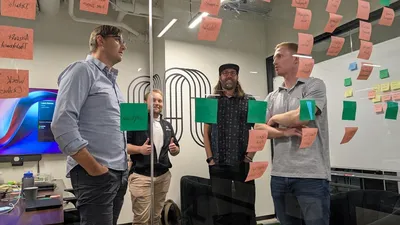
AI Industry Sparks Hiring Boom for Forward-Deployed Engineers
Companies are aggressively recruiting technical talent who can bridge the gap between raw AI models and practical business applications. This hybrid role of coding and client-facing strategy is becoming the most lucrative pivot for software developers.

Law Firm Latham & Watkins Ramps Up Hiring for AI Roles
Top-tier law firm Latham & Watkins is actively recruiting for specialized artificial intelligence positions. The firm's career page reveals a strategic shift toward building internal AI infrastructure rather than just relying on vendors.

How OpenAI's Codex is fundamentally reshaping software engineering jobs
An inside look at the creation of the model powering GitHub Copilot reveals the specific coding tasks being permanently automated. Developers must pivot to system architecture as AI handles routine code generation.

Why Engineers Must Master AI Agent Workflows
As AI agents increasingly handle routine coding tasks, software engineers must shift their focus to managing complex system architectures and high-level oversight. Mastering these broader workflows will be critical for developers to maintain their value.
Last scored March 14, 2026 · Based on BLS employment data and O*NET task analysis