Emergency Medical Technicians and Paramedics
Assess injuries, administer emergency medical care, and extricate trapped individuals. Transport injured or sick persons to medical facilities.
How AI Impacts Each Task
15 tasks analyzed
Administer first aid treatment or life support care to sick or injured persons in prehospital settings.
Operate equipment, such as electrocardiograms (EKGs), external defibrillators, or bag valve mask resuscitators, in advanced life support environments.
Perform emergency diagnostic and treatment procedures, such as stomach suction, airway management, or heart monitoring, during ambulance ride.
Observe, record, and report to physician the patient's condition or injury, the treatment provided, and reactions to drugs or treatment.
Assess nature and extent of illness or injury to establish and prioritize medical procedures.
Drive mobile intensive care unit to specified location, following instructions from emergency medical dispatcher.
Decontaminate ambulance interior following treatment of patient with infectious disease and report case to proper authorities.
Administer drugs, orally or by injection, or perform intravenous procedures under a physician's direction.
Coordinate work with other emergency medical team members or police or fire department personnel.
Immobilize patient for placement on stretcher and ambulance transport, using backboard or other spinal immobilization device.
Maintain vehicles and medical and communication equipment and replenish first aid equipment and supplies.
Communicate with dispatchers or treatment center personnel to provide information about situation, to arrange reception of victims, or to receive instructions for further treatment.
Coordinate with treatment center personnel to obtain patients' vital statistics and medical history, to determine the circumstances of the emergency, and to administer emergency treatment.
Comfort and reassure patients.
Attend training classes to maintain certification licensure, keep abreast of new developments in the field, or maintain existing knowledge.
| Task | AI Capability | Risk | Time % | |
|---|---|---|---|---|
| Administer first aid treatment or life support care to sick or injured persons in prehospital settings. | 0Estimated | 9.0% | 15% | |
| Operate equipment, such as electrocardiograms (EKGs), external defibrillators, or bag valve mask resuscitators, in advanced life support environments. | 0Estimated | 9.0% | 8% | |
| Perform emergency diagnostic and treatment procedures, such as stomach suction, airway management, or heart monitoring, during ambulance ride. | 0Estimated | 9.0% | 10% | |
| Observe, record, and report to physician the patient's condition or injury, the treatment provided, and reactions to drugs or treatment. | 62Estimated | 74.0% | 8% | |
| Assess nature and extent of illness or injury to establish and prioritize medical procedures. | 65Observed | 53.0% | 10% | |
| Drive mobile intensive care unit to specified location, following instructions from emergency medical dispatcher. | 5Estimated | 11.0% | 10% | |
| Decontaminate ambulance interior following treatment of patient with infectious disease and report case to proper authorities. | 35Estimated | 47.0% | 4% | |
| Administer drugs, orally or by injection, or perform intravenous procedures under a physician's direction. | 0Estimated | 9.0% | 5% | |
| Coordinate work with other emergency medical team members or police or fire department personnel. | 10Estimated | 19.0% | 5% | |
| Immobilize patient for placement on stretcher and ambulance transport, using backboard or other spinal immobilization device. | 0Estimated | 9.0% | 5% | |
| Maintain vehicles and medical and communication equipment and replenish first aid equipment and supplies. | 40Estimated | 49.0% | 5% | |
| Communicate with dispatchers or treatment center personnel to provide information about situation, to arrange reception of victims, or to receive instructions for further treatment. | 70Estimated | 77.2% | 5% | |
| Coordinate with treatment center personnel to obtain patients' vital statistics and medical history, to determine the circumstances of the emergency, and to administer emergency treatment. | 20Estimated | 23.0% | 4% | |
| Comfort and reassure patients. | 10Estimated | 19.0% | 4% | |
| Attend training classes to maintain certification licensure, keep abreast of new developments in the field, or maintain existing knowledge. | 0Estimated | 49.2% | 2% |
Skill Impact Analysis
AI-Vulnerable Skills (6)
High reliance on Mathematics is a risk area. Consider developing complementary AI-resistant skills to maintain value.
High reliance on Information Ordering is a risk area. Consider developing complementary AI-resistant skills to maintain value.
High reliance on Reading Comprehension is a risk area. Consider developing complementary AI-resistant skills to maintain value.
Memorization is AI-vulnerable but has moderate importance in this role. AI tools may handle this; focus on higher-value skills.
Mathematics is AI-vulnerable but has moderate importance in this role. AI tools may handle this; focus on higher-value skills.
Programming is AI-vulnerable but has moderate importance in this role. AI tools may handle this; focus on higher-value skills.
AI-Resistant Skills (11)
Adaptability/Flexibility is AI-resistant — strengthening this skill provides durable career protection.
Leadership is AI-resistant — strengthening this skill provides durable career protection.
Coordination is AI-resistant — strengthening this skill provides durable career protection.
Service Orientation is AI-resistant — strengthening this skill provides durable career protection.
Social Perceptiveness is AI-resistant — strengthening this skill provides durable career protection.
Complex Problem Solving is AI-resistant — strengthening this skill provides durable career protection.
Manual Dexterity is AI-resistant — strengthening this skill provides durable career protection.
Instructing is AI-resistant — strengthening this skill provides durable career protection.
Recommended Courses
Courses matched to Emergency Medical Technicians and Paramedics skill gaps, ranked by relevance to your displacement risk profile.
Get personalized recommendations. Answer a few questions about your experience and skills to get course suggestions tailored specifically to you.
Upskill to Reduce Risk
Courses addressing your most AI-vulnerable skills
SQL Fundamentals Skill Track
by DataCamp
Estimated Impact
AI-Augmentation Tools
Learn to work alongside AI and boost your productivity
Google UX Design Professional Certificate
by Google
Estimated Impact
Strengthen Your Edge
Double down on skills AI can't replicate
Leading People and Teams Specialization
by University of Michigan
Estimated Impact
We may earn a commission when you enroll through our links, at no extra cost to you. This helps fund the Takeover Tracker.
Risk reduction and salary impact are estimates based on skill gap analysis, course relevance, and labor market data. Actual results vary by individual circumstance.
Alternate Career Paths
See all transitionsEmbalmers
18%Median salary: $56,280
Higher risk than 3% of other occupations
Fire Inspectors
29%Median salary: $78,060
Higher risk than 32% of other occupations
Licensed Practical and Licensed Vocational Nurses
21%Median salary: $62,340
Higher risk than 9% of other occupations
Municipal Fire Fighting and Prevention Supervisors
27%Median salary: $92,430
Higher risk than 25% of other occupations
Municipal Firefighters
18%Median salary: $59,530
Higher risk than 3% of other occupations
Occupational Health and Safety Technicians
32%Higher risk than 52% of other occupations
Police Patrol Officers
25%Median salary: $76,290
Higher risk than 20% of other occupations
Registered Nurses
24%Median salary: $93,600
Higher risk than 18% of other occupations
Respiratory Therapists
27%Median salary: $80,450
Higher risk than 25% of other occupations
Sheriffs and Deputy Sheriffs
22%Median salary: $76,290
Higher risk than 11% of other occupations
Score History
Risk score over 2 scoring runs
overall change
Education & Training
Percentage of workers at each education and training level
Education Level
Prior Experience Needed
Work experience required to enter this job
Training Provided After Hiring
How long it typically takes to learn on the job
Related News
Recent articles about AI affecting this occupation
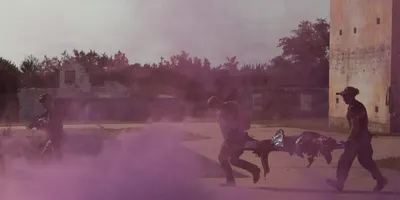
Ukrainian and US developers are building AI tools for wounded troops when there is no medic nearby
New chatbots and apps are being deployed to guide soldiers through battlefield triage when human medical personnel cannot reach them. The technology acts as an emergency substitute for trained combat medics in active warzones.
Last scored March 14, 2026 · Based on BLS employment data and O*NET task analysis