Forest Fire Fighting and Prevention Supervisors
Supervise fire fighters who control and suppress fires in forests or vacant public land.
How AI Impacts Each Task
28 tasks analyzed
Communicate fire details to superiors, subordinates, or interagency dispatch centers, using two-way radios.
Evaluate size, location, and condition of forest fires.
Serve as a working leader of an engine, hand, helicopter, or prescribed fire crew of three or more firefighters.
Maintain fire suppression equipment in good condition, checking equipment periodically to ensure that it is ready for use.
Train workers in skills such as parachute jumping, fire suppression, aerial observation, or radio communication, in the classroom or on the job.
Request and dispatch crews and position equipment so fires can be contained safely and effectively.
Operate wildland fire engines or hoselays.
Observe fires or crews from air to determine firefighting force requirements or to note changing conditions that will affect firefighting efforts.
Recruit or hire forest firefighting personnel.
Maintain knowledge of forest fire laws and fire prevention techniques and tactics.
Monitor prescribed burns to ensure that they are conducted safely and effectively.
Direct and supervise prescribed burn projects and prepare postburn reports, analyzing burn conditions and results.
Schedule employee work assignments and set work priorities.
Identify staff training and development needs to ensure that appropriate training can be arranged.
Monitor fire suppression expenditures to ensure that they are necessary and reasonable.
Direct investigations of suspected arson in wildfires, working closely with other investigating agencies.
Drive crew carriers to transport firefighters to fire sites.
Inspect stations, uniforms, equipment, or recreation areas to ensure compliance with safety standards, taking corrective action as necessary.
Perform administrative duties, such as compiling and maintaining records, completing forms, preparing reports, or composing correspondence.
Regulate open burning by issuing burning permits, inspecting problem sites, issuing citations for violations of laws and ordinances, or educating the public in proper burning practices.
Review and evaluate employee performance.
Appraise damage caused by fires and prepare damage reports.
Recommend equipment modifications or new equipment purchases.
Investigate special fire issues, such as railroad fire problems, right-of-way burning, or slash disposal problems.
Lead work crews in the maintenance of structures or access roads in forest areas.
Educate the public about forest fire prevention by participating in activities such as exhibits or presentations or by distributing promotional materials.
Analyze burn conditions and results, and prepare postburn reports.
Plan, direct, and supervise prescribed burn projects.
| Task | AI Capability | Risk | Time % | |
|---|---|---|---|---|
| Communicate fire details to superiors, subordinates, or interagency dispatch centers, using two-way radios. | 20Estimated | 23.0% | 6% | |
| Evaluate size, location, and condition of forest fires. | 70Estimated | 55.0% | 6% | |
| Serve as a working leader of an engine, hand, helicopter, or prescribed fire crew of three or more firefighters. | 5Estimated | 17.0% | 8% | |
| Maintain fire suppression equipment in good condition, checking equipment periodically to ensure that it is ready for use. | 35Estimated | 47.0% | 4% | |
| Train workers in skills such as parachute jumping, fire suppression, aerial observation, or radio communication, in the classroom or on the job. | 15Estimated | 21.0% | 4% | |
| Request and dispatch crews and position equipment so fires can be contained safely and effectively. | 50Estimated | 47.0% | 5% | |
| Operate wildland fire engines or hoselays. | 5Estimated | 11.0% | 5% | |
| Observe fires or crews from air to determine firefighting force requirements or to note changing conditions that will affect firefighting efforts. | 70Estimated | 55.0% | 3% | |
| Recruit or hire forest firefighting personnel. | 40Estimated | 31.0% | 2% | |
| Maintain knowledge of forest fire laws and fire prevention techniques and tactics. | 92Estimated | 86.0% | 2% | |
| Monitor prescribed burns to ensure that they are conducted safely and effectively. | 55Estimated | 49.0% | 4% | |
| Direct and supervise prescribed burn projects and prepare postburn reports, analyzing burn conditions and results. | 30Estimated | 27.0% | 4% | |
| Schedule employee work assignments and set work priorities. | 87Estimated | 84.0% | 4% | |
| Identify staff training and development needs to ensure that appropriate training can be arranged. | 40Estimated | 31.0% | 2% | |
| Monitor fire suppression expenditures to ensure that they are necessary and reasonable. | 92Estimated | 86.0% | 2% | |
| Direct investigations of suspected arson in wildfires, working closely with other investigating agencies. | 35Estimated | 41.0% | 2% | |
| Drive crew carriers to transport firefighters to fire sites. | 30Estimated | 45.0% | 3% | |
| Inspect stations, uniforms, equipment, or recreation areas to ensure compliance with safety standards, taking corrective action as necessary. | 52Estimated | 70.0% | 3% | |
| Perform administrative duties, such as compiling and maintaining records, completing forms, preparing reports, or composing correspondence. | 44.62Observed | 67.1% | 5% | |
| Regulate open burning by issuing burning permits, inspecting problem sites, issuing citations for violations of laws and ordinances, or educating the public in proper burning practices. | 35Estimated | 29.0% | 3% | |
| Review and evaluate employee performance. | 35Estimated | 29.0% | 3% | |
| Appraise damage caused by fires and prepare damage reports. | 70Estimated | 55.0% | 3% | |
| Recommend equipment modifications or new equipment purchases. | 55Estimated | 49.0% | 2% | |
| Investigate special fire issues, such as railroad fire problems, right-of-way burning, or slash disposal problems. | 35Estimated | 41.0% | 3% | |
| Lead work crews in the maintenance of structures or access roads in forest areas. | 10Estimated | 19.0% | 3% | |
| Educate the public about forest fire prevention by participating in activities such as exhibits or presentations or by distributing promotional materials. | 20Estimated | 23.0% | 2% | |
| Analyze burn conditions and results, and prepare postburn reports. | 60Estimated | 51.0% | 3% | |
| Plan, direct, and supervise prescribed burn projects. | 25Estimated | 37.0% | 4% |
Skill Impact Analysis
AI-Vulnerable Skills (6)
High reliance on Information Ordering is a risk area. Consider developing complementary AI-resistant skills to maintain value.
High reliance on Reading Comprehension is a risk area. Consider developing complementary AI-resistant skills to maintain value.
High reliance on Mathematics is a risk area. Consider developing complementary AI-resistant skills to maintain value.
Memorization is AI-vulnerable but has moderate importance in this role. AI tools may handle this; focus on higher-value skills.
Mathematics is AI-vulnerable but has moderate importance in this role. AI tools may handle this; focus on higher-value skills.
Programming is AI-vulnerable but has moderate importance in this role. AI tools may handle this; focus on higher-value skills.
AI-Resistant Skills (11)
Leadership is AI-resistant — strengthening this skill provides durable career protection.
Adaptability/Flexibility is AI-resistant — strengthening this skill provides durable career protection.
Complex Problem Solving is AI-resistant — strengthening this skill provides durable career protection.
Coordination is AI-resistant — strengthening this skill provides durable career protection.
Social Perceptiveness is AI-resistant — strengthening this skill provides durable career protection.
Instructing is AI-resistant — strengthening this skill provides durable career protection.
Manual Dexterity is AI-resistant — strengthening this skill provides durable career protection.
Persuasion is AI-resistant — strengthening this skill provides durable career protection.
Recommended Courses
Courses matched to Forest Fire Fighting and Prevention Supervisors skill gaps, ranked by relevance to your displacement risk profile.
Get personalized recommendations. Answer a few questions about your experience and skills to get course suggestions tailored specifically to you.
Upskill to Reduce Risk
Courses addressing your most AI-vulnerable skills
SQL Fundamentals Skill Track
by DataCamp
Estimated Impact
AI-Augmentation Tools
Learn to work alongside AI and boost your productivity
Cybersecurity Fundamentals Path
by Pluralsight
Estimated Impact
Strengthen Your Edge
Double down on skills AI can't replicate
Leading People and Teams Specialization
by University of Michigan
Estimated Impact
We may earn a commission when you enroll through our links, at no extra cost to you. This helps fund the Takeover Tracker.
Risk reduction and salary impact are estimates based on skill gap analysis, course relevance, and labor market data. Actual results vary by individual circumstance.
Alternate Career Paths
See all transitionsCommercial Divers
22%Median salary: $61,130
Higher risk than 12% of other occupations
Electrical Power-Line Installers and Repairers
22%Median salary: $92,560
Higher risk than 11% of other occupations
Emergency Medical Technicians and Paramedics
17%Higher risk than 3% of other occupations
First-Line Supervisors of Animal Husbandry and Animal Care Workers
27%Median salary: $59,330
Higher risk than 23% of other occupations
First-Line Supervisors of Construction Trades and Extraction Workers
26%Median salary: $78,690
Higher risk than 21% of other occupations
Forest and Conservation Technicians
28%Higher risk than 29% of other occupations
Forest Firefighters
21%Median salary: $59,530
Higher risk than 9% of other occupations
Municipal Fire Fighting and Prevention Supervisors
27%Median salary: $92,430
Higher risk than 25% of other occupations
Municipal Firefighters
18%Median salary: $59,530
Higher risk than 3% of other occupations
Ship and Boat Captains
28%Median salary: $85,540
Higher risk than 28% of other occupations
Score History
Risk score over 2 scoring runs
overall change
Education & Training
Percentage of workers at each education and training level
Education Level
Prior Experience Needed
Work experience required to enter this job
Training Provided After Hiring
How long it typically takes to learn on the job
Related News
Recent articles about AI affecting this occupation
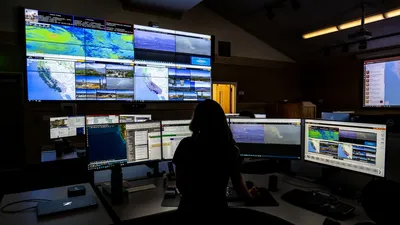
AI is Now Directing Firefighter Deployments in Wildfire Response
Fire officials are beginning to rely on artificial intelligence to make critical decisions about where to deploy human crews during multi-fire events. This shift moves AI from simple detection into a management role, directly dictating the dangerous daily operations of wildland firefighters.
Last scored March 14, 2026 · Based on BLS employment data and O*NET task analysis