Food Batchmakers
Set up and operate equipment that mixes or blends ingredients used in the manufacturing of food products. Includes candy makers and cheese makers.
How AI Impacts Each Task
25 tasks analyzed
Record production and test data for each food product batch, such as the ingredients used, temperature, test results, and time cycle.
Follow recipes to produce food products of specified flavor, texture, clarity, bouquet, or color.
Set up, operate, and tend equipment that cooks, mixes, blends, or processes ingredients in the manufacturing of food products, according to formulas or recipes.
Mix or blend ingredients, according to recipes, using a paddle or an agitator, or by controlling vats that heat and mix ingredients.
Clean and sterilize vats and factory processing areas.
Select and measure or weigh ingredients, using English or metric measures and balance scales.
Fill processing or cooking containers, such as kettles, rotating cookers, pressure cookers, or vats, with ingredients, by opening valves, by starting pumps or injectors, or by hand.
Turn valve controls to start equipment and to adjust operation to maintain product quality.
Grade food products according to government regulations or according to type, color, bouquet, and moisture content.
Press switches and turn knobs to start, adjust, and regulate equipment, such as beaters, extruders, discharge pipes, and salt pumps.
Test food product samples for moisture content, acidity level, specific gravity, or butter-fat content, and continue processing until desired levels are reached.
Modify cooking and forming operations based on the results of sampling processes, adjusting time cycles and ingredients to achieve desired qualities, such as firmness or texture.
Observe gauges and thermometers to determine if the mixing chamber temperature is within specified limits, and turn valves to control the temperature.
Inspect vats after cleaning to ensure that fermentable residue has been removed.
Observe and listen to equipment to detect possible malfunctions, such as leaks or plugging, and report malfunctions or undesirable tastes to supervisors.
Examine, feel, and taste product samples during production to evaluate quality, color, texture, flavor, and bouquet, and document the results.
Determine mixing sequences, based on knowledge of temperature effects and of the solubility of specific ingredients.
Inspect and pack the final product.
Manipulate products, by hand or using machines, to separate, spread, knead, spin, cast, cut, pull, or roll products.
Give directions to other workers who are assisting in the batchmaking process.
Operate refining machines to reduce the particle size of cooked batches.
Formulate or modify recipes for specific kinds of food products.
Place products on carts or conveyors to transfer them to the next stage of processing.
Cool food product batches on slabs or in water-cooled kettles.
Homogenize or pasteurize material to prevent separation or to obtain prescribed butterfat content, using a homogenizing device.
| Task | AI Capability | Risk | Time % | |
|---|---|---|---|---|
| Record production and test data for each food product batch, such as the ingredients used, temperature, test results, and time cycle. | 92Estimated | 86.0% | 4% | |
| Follow recipes to produce food products of specified flavor, texture, clarity, bouquet, or color. | 66.85Observed | 59.7% | 9% | |
| Set up, operate, and tend equipment that cooks, mixes, blends, or processes ingredients in the manufacturing of food products, according to formulas or recipes. | 52.18Observed | 53.9% | 11% | |
| Mix or blend ingredients, according to recipes, using a paddle or an agitator, or by controlling vats that heat and mix ingredients. | 70Estimated | 61.0% | 8% | |
| Clean and sterilize vats and factory processing areas. | 60Estimated | 57.0% | 5% | |
| Select and measure or weigh ingredients, using English or metric measures and balance scales. | 65Estimated | 59.0% | 6% | |
| Fill processing or cooking containers, such as kettles, rotating cookers, pressure cookers, or vats, with ingredients, by opening valves, by starting pumps or injectors, or by hand. | 75Estimated | 63.0% | 5% | |
| Turn valve controls to start equipment and to adjust operation to maintain product quality. | 80Estimated | 65.0% | 4% | |
| Grade food products according to government regulations or according to type, color, bouquet, and moisture content. | 87Estimated | 84.0% | 2% | |
| Press switches and turn knobs to start, adjust, and regulate equipment, such as beaters, extruders, discharge pipes, and salt pumps. | 75Estimated | 63.0% | 4% | |
| Test food product samples for moisture content, acidity level, specific gravity, or butter-fat content, and continue processing until desired levels are reached. | 92Estimated | 86.0% | 3% | |
| Modify cooking and forming operations based on the results of sampling processes, adjusting time cycles and ingredients to achieve desired qualities, such as firmness or texture. | 75Estimated | 57.0% | 4% | |
| Observe gauges and thermometers to determine if the mixing chamber temperature is within specified limits, and turn valves to control the temperature. | 97Estimated | 88.0% | 4% | |
| Inspect vats after cleaning to ensure that fermentable residue has been removed. | 50Estimated | 53.0% | 2% | |
| Observe and listen to equipment to detect possible malfunctions, such as leaks or plugging, and report malfunctions or undesirable tastes to supervisors. | 80Estimated | 59.0% | 3% | |
| Examine, feel, and taste product samples during production to evaluate quality, color, texture, flavor, and bouquet, and document the results. | 30Estimated | 39.0% | 4% | |
| Determine mixing sequences, based on knowledge of temperature effects and of the solubility of specific ingredients. | 70Estimated | 55.0% | 3% | |
| Inspect and pack the final product. | 85Estimated | 67.0% | 3% | |
| Manipulate products, by hand or using machines, to separate, spread, knead, spin, cast, cut, pull, or roll products. | 70Estimated | 61.0% | 3% | |
| Give directions to other workers who are assisting in the batchmaking process. | 35Estimated | 29.0% | 3% | |
| Operate refining machines to reduce the particle size of cooked batches. | 75Estimated | 63.0% | 2% | |
| Formulate or modify recipes for specific kinds of food products. | 53.37Observed | 48.4% | 2% | |
| Place products on carts or conveyors to transfer them to the next stage of processing. | 80Estimated | 65.0% | 2% | |
| Cool food product batches on slabs or in water-cooled kettles. | 75Estimated | 63.0% | 2% | |
| Homogenize or pasteurize material to prevent separation or to obtain prescribed butterfat content, using a homogenizing device. | 90Estimated | 69.0% | 2% |
Skill Impact Analysis
AI-Vulnerable Skills (6)
High reliance on Information Ordering is a risk area. Consider developing complementary AI-resistant skills to maintain value.
High reliance on Mathematics is a risk area. Consider developing complementary AI-resistant skills to maintain value.
High reliance on Reading Comprehension is a risk area. Consider developing complementary AI-resistant skills to maintain value.
Mathematics is AI-vulnerable but has moderate importance in this role. AI tools may handle this; focus on higher-value skills.
Memorization is AI-vulnerable but has moderate importance in this role. AI tools may handle this; focus on higher-value skills.
Programming is AI-vulnerable but has moderate importance in this role. AI tools may handle this; focus on higher-value skills.
AI-Resistant Skills (11)
Adaptability/Flexibility is AI-resistant — strengthening this skill provides durable career protection.
Leadership is AI-resistant — strengthening this skill provides durable career protection.
Manual Dexterity is AI-resistant — strengthening this skill provides durable career protection.
Coordination is AI-resistant — strengthening this skill provides durable career protection.
Complex Problem Solving is AI-resistant — strengthening this skill provides durable career protection.
Social Perceptiveness is AI-resistant — strengthening this skill provides durable career protection.
Service Orientation is AI-resistant — strengthening this skill provides durable career protection.
Instructing is AI-resistant — strengthening this skill provides durable career protection.
Recommended Courses
Courses matched to Food Batchmakers skill gaps, ranked by relevance to your displacement risk profile.
Get personalized recommendations. Answer a few questions about your experience and skills to get course suggestions tailored specifically to you.
Upskill to Reduce Risk
Courses addressing your most AI-vulnerable skills
SQL Fundamentals Skill Track
by DataCamp
Estimated Impact
AI-Augmentation Tools
Learn to work alongside AI and boost your productivity
Cybersecurity Fundamentals Path
by Pluralsight
Estimated Impact
Strengthen Your Edge
Double down on skills AI can't replicate
Leading People and Teams Specialization
by University of Michigan
Estimated Impact
We may earn a commission when you enroll through our links, at no extra cost to you. This helps fund the Takeover Tracker.
Risk reduction and salary impact are estimates based on skill gap analysis, course relevance, and labor market data. Actual results vary by individual circumstance.
Alternate Career Paths
See all transitionsAgricultural Workers, All Other
Carpenters
Cutting, Punching, and Press Machine Setters, Operators, and Tenders, Metal and Plastic
35%Median salary: $45,590
Higher risk than 64% of other occupations
Fallers
24%Higher risk than 17% of other occupations
Food and Tobacco Roasting, Baking, and Drying Machine Operators and Tenders
43%Median salary: $42,730
Higher risk than 87% of other occupations
Food Cooking Machine Operators and Tenders
45%Median salary: $40,550
Higher risk than 92% of other occupations
Forging Machine Setters, Operators, and Tenders, Metal and Plastic
35%Median salary: $49,240
Higher risk than 67% of other occupations
Log Graders and Scalers
46%Higher risk than 93% of other occupations
Logging Equipment Operators
20%Higher risk than 7% of other occupations
Logging Workers, All Other
Machine Feeders and Offbearers
51%Median salary: $39,700
Higher risk than 98% of other occupations
Mixing and Blending Machine Setters, Operators, and Tenders
44%Median salary: $47,680
Higher risk than 90% of other occupations
Molding and Casting Workers
37%Median salary: $45,690
Higher risk than 72% of other occupations
Packaging and Filling Machine Operators and Tenders
47%Median salary: $40,900
Higher risk than 95% of other occupations
Print Binding and Finishing Workers
37%Median salary: $39,820
Higher risk than 71% of other occupations
Separating, Filtering, Clarifying, Precipitating, and Still Machine Setters, Operators, and Tenders
39%Median salary: $49,500
Higher risk than 78% of other occupations
Score History
Risk score over 2 scoring runs
overall change
Education & Training
Percentage of workers at each education and training level
Education Level
Prior Experience Needed
Work experience required to enter this job
Training Provided After Hiring
How long it typically takes to learn on the job
Related News
Recent articles about AI affecting this occupation
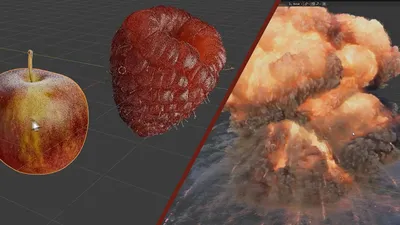
New Blender Update Automates Complex 3D Workflows for Artists
The integration of native Gaussian splatting drastically reduces the manual labor required to render photorealistic 3D environments. VFX professionals will need to adapt as tasks that once took days can now be generated instantly.

New AI Tool Allows ChatGPT to Operate 3D Modeling Software Blender
A new integration called AstraBlender enables ChatGPT to directly control Blender using text prompts. This lowers the technical barrier for 3D design, potentially disrupting entry-level modeling and animation roles.

PayPal cuts 164 jobs in Ireland amid global fintech restructuring
The payment processor is eliminating nearly 12% of its Irish workforce between October and November. This move is part of a broader global transformation program, reflecting ongoing workforce reductions across the fintech sector.
Last scored March 14, 2026 · Based on BLS employment data and O*NET task analysis