Patient Representatives
Assist patients in obtaining services, understanding policies and making health care decisions.
How AI Impacts Each Task
13 tasks analyzed
Coordinate communication between patients, family members, medical staff, administrative staff, or regulatory agencies.
Interview patients or their representatives to identify problems relating to care.
Maintain knowledge of community services and resources available to patients.
Refer patients to appropriate health care services or resources.
Investigate and direct patient inquiries or complaints to appropriate medical staff members and follow up to ensure satisfactory resolution.
Explain policies, procedures, or services to patients using medical or administrative knowledge.
Provide consultation or training to volunteers or staff on topics such as guest relations, patients' rights, or medical issues.
Collect and report data on topics such as patient encounters or inter-institutional problems, making recommendations for change when appropriate.
Identify and share research, recommendations, or other information regarding legal liabilities, risk management, or quality of care.
Read current literature, talk with colleagues, continue education, or participate in professional organizations or conferences to keep abreast of developments in the field.
Develop and distribute newsletters, brochures, or other printed materials to share information with patients or medical staff.
Analyze patients' abilities to pay to determine charges on a sliding scale.
Teach patients to use home health care equipment.
| Task | AI Capability | Risk | Time % | |
|---|---|---|---|---|
| Coordinate communication between patients, family members, medical staff, administrative staff, or regulatory agencies. | 42.37Observed | 32.0% | 15% | |
| Interview patients or their representatives to identify problems relating to care. | 33.7Observed | 28.5% | 15% | |
| Maintain knowledge of community services and resources available to patients. | 87Estimated | 84.0% | 5% | |
| Refer patients to appropriate health care services or resources. | 53.67Observed | 36.5% | 10% | |
| Investigate and direct patient inquiries or complaints to appropriate medical staff members and follow up to ensure satisfactory resolution. | 36.78Observed | 29.7% | 15% | |
| Explain policies, procedures, or services to patients using medical or administrative knowledge. | 47.95Observed | 34.2% | 10% | |
| Provide consultation or training to volunteers or staff on topics such as guest relations, patients' rights, or medical issues. | 58.65Observed | 38.5% | 5% | |
| Collect and report data on topics such as patient encounters or inter-institutional problems, making recommendations for change when appropriate. | 60Estimated | 51.0% | 5% | |
| Identify and share research, recommendations, or other information regarding legal liabilities, risk management, or quality of care. | 65Estimated | 53.0% | 5% | |
| Read current literature, talk with colleagues, continue education, or participate in professional organizations or conferences to keep abreast of developments in the field. | 42Estimated | 66.0% | 5% | |
| Develop and distribute newsletters, brochures, or other printed materials to share information with patients or medical staff. | 59.72Observed | 73.1% | 4% | |
| Analyze patients' abilities to pay to determine charges on a sliding scale. | 95Estimated | 87.2% | 4% | |
| Teach patients to use home health care equipment. | 10Estimated | 19.0% | 2% |
Skill Impact Analysis
AI-Vulnerable Skills (6)
High reliance on Reading Comprehension is a risk area. Consider developing complementary AI-resistant skills to maintain value.
High reliance on Information Ordering is a risk area. Consider developing complementary AI-resistant skills to maintain value.
Mathematics is AI-vulnerable but has moderate importance in this role. AI tools may handle this; focus on higher-value skills.
Memorization is AI-vulnerable but has moderate importance in this role. AI tools may handle this; focus on higher-value skills.
Mathematics is AI-vulnerable but has moderate importance in this role. AI tools may handle this; focus on higher-value skills.
Programming is AI-vulnerable but has moderate importance in this role. AI tools may handle this; focus on higher-value skills.
AI-Resistant Skills (11)
Adaptability/Flexibility is AI-resistant — strengthening this skill provides durable career protection.
Leadership is AI-resistant — strengthening this skill provides durable career protection.
Social Perceptiveness is AI-resistant — strengthening this skill provides durable career protection.
Service Orientation is AI-resistant — strengthening this skill provides durable career protection.
Coordination is AI-resistant — strengthening this skill provides durable career protection.
Persuasion is AI-resistant — strengthening this skill provides durable career protection.
Negotiation is AI-resistant — strengthening this skill provides durable career protection.
Instructing is AI-resistant — strengthening this skill provides durable career protection.
Recommended Courses
Courses matched to Patient Representatives skill gaps, ranked by relevance to your displacement risk profile.
Get personalized recommendations. Answer a few questions about your experience and skills to get course suggestions tailored specifically to you.
Upskill to Reduce Risk
Courses addressing your most AI-vulnerable skills
SQL Fundamentals Skill Track
by DataCamp
Estimated Impact
AI-Augmentation Tools
Learn to work alongside AI and boost your productivity
Creative Writing Specialization
by Wesleyan University
Estimated Impact
Strengthen Your Edge
Double down on skills AI can't replicate
Leading People and Teams Specialization
by University of Michigan
Estimated Impact
We may earn a commission when you enroll through our links, at no extra cost to you. This helps fund the Takeover Tracker.
Risk reduction and salary impact are estimates based on skill gap analysis, course relevance, and labor market data. Actual results vary by individual circumstance.
Alternate Career Paths
See all transitionsAdvanced Practice Psychiatric Nurses
28%Median salary: $93,600
Higher risk than 27% of other occupations
Child, Family, and School Social Workers
32%Median salary: $58,570
Higher risk than 49% of other occupations
Education Administrators, Preschool and Childcare Center/Program
25%Median salary: $56,270
Higher risk than 20% of other occupations
Educational, Guidance, School, and Vocational Counselors
23%Median salary: $65,140
Higher risk than 14% of other occupations
Health Educators
31%Median salary: $63,000
Higher risk than 47% of other occupations
Healthcare Social Workers
30%Median salary: $68,090
Higher risk than 40% of other occupations
Probation Officers and Correctional Treatment Specialists
33%Median salary: $64,520
Higher risk than 58% of other occupations
Recreational Therapists
23%Median salary: $60,280
Higher risk than 13% of other occupations
Social and Human Service Assistants
28%Median salary: $45,120
Higher risk than 27% of other occupations
Substance Abuse and Behavioral Disorder Counselors
29%Higher risk than 34% of other occupations
Score History
Risk score over 2 scoring runs
overall change
Education & Training
Percentage of workers at each education and training level
Education Level
Prior Experience Needed
Work experience required to enter this job
Training Provided After Hiring
How long it typically takes to learn on the job
Related News
Recent articles about AI affecting this occupation
Healthcare and Call Centers See Real-World AI Agent Deployments
Companies like NiCE and AOK PLUS are moving beyond pilot programs, deploying AI agents directly into high-volume healthcare member services. Meanwhile, platforms like Observe.AI are using AI to measure and automate employee coaching.
AI Agents Automating Healthcare Admin Fuel Forus's $3B Valuation
Forus secured $150M to expand AI agents that handle insurance coverage and drug fulfillment. This massive investment signals an accelerated push to automate healthcare administration roles traditionally held by human navigators.
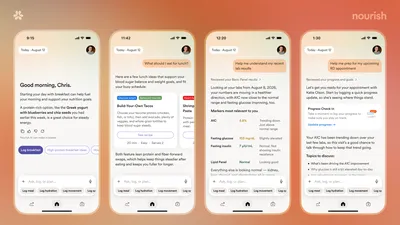
Nourish Rolls Out AI Assistant to Automate Patient Care Between Visits
A new generative AI tool is taking over meal planning, lab analysis, and appointment prep for patients. By automating these routine advisory tasks, the app shifts the traditional workload of dietitians and care coordinators to an algorithm.
Last scored March 14, 2026 · Based on BLS employment data and O*NET task analysis