Police Detectives
Conduct investigations to prevent crimes or solve criminal cases.
How AI Impacts Each Task
31 tasks analyzed
Provide testimony as a witness in court.
Check victims for signs of life, such as breathing and pulse.
Secure deceased body and obtain evidence from it, preventing bystanders from tampering with it prior to medical examiner's arrival.
Obtain facts or statements from complainants, witnesses, and accused persons and record interviews, using recording device.
Record progress of investigation, maintain informational files on suspects, and submit reports to commanding officer or magistrate to authorize warrants.
Prepare charges or responses to charges, or information for court cases, according to formalized procedures.
Examine crime scenes to obtain clues and evidence, such as loose hairs, fibers, clothing, or weapons.
Obtain evidence from suspects.
Preserve, process, and analyze items of evidence obtained from crime scenes and suspects, placing them in proper containers and destroying evidence no longer needed.
Obtain summary of incident from officer in charge at crime scene, taking care to avoid disturbing evidence.
Note, mark, and photograph location of objects found, such as footprints, tire tracks, bullets and bloodstains, and take measurements of the scene.
Examine records and governmental agency files to find identifying data about suspects.
Take photographs from all angles of relevant parts of a crime scene, including entrance and exit routes and streets and intersections.
Secure persons at scene, keeping witnesses from conversing or leaving the scene before investigators arrive.
Provide information to lab personnel concerning the source of an item of evidence and tests to be performed.
Analyze completed police reports to determine what additional information and investigative work is needed.
Videotape scenes where possible, including collection of evidence, examination of victim at scene, and defendants and witnesses.
Prepare and serve search and arrest warrants.
Question individuals or observe persons and establishments to confirm information given to patrol officers.
Participate or assist in raids and arrests.
Organize scene search, assigning specific tasks and areas of search to individual officers and obtaining adequate lighting as necessary.
Summon medical help for injured individuals and alert medical personnel to take statements from them.
Notify command of situation and request assistance.
Observe and photograph narcotic purchase transactions to compile evidence and protect undercover investigators.
Block or rope off scene and check perimeter to ensure that entire scene is secured.
Notify, or request notification of, medical examiner or district attorney representative.
Maintain surveillance of establishments to obtain identifying information on suspects.
Note relevant details upon arrival at scene, such as time of day and weather conditions.
Monitor conditions of victims who are unconscious so that arrangements can be made to take statements if consciousness is regained.
Coordinate with outside agencies and serve on interagency task forces to combat specific types of crime.
Schedule polygraph tests for consenting parties and record results of test interpretations for presentation with findings.
| Task | AI Capability | Risk | Time % | |
|---|---|---|---|---|
| Provide testimony as a witness in court. | 0Estimated | 15.0% | 2% | |
| Check victims for signs of life, such as breathing and pulse. | 0Estimated | 9.0% | 1% | |
| Secure deceased body and obtain evidence from it, preventing bystanders from tampering with it prior to medical examiner's arrival. | 0Estimated | 9.0% | 1% | |
| Obtain facts or statements from complainants, witnesses, and accused persons and record interviews, using recording device. | 15Estimated | 21.0% | 4% | |
| Record progress of investigation, maintain informational files on suspects, and submit reports to commanding officer or magistrate to authorize warrants. | 90Estimated | 85.2% | 3% | |
| Prepare charges or responses to charges, or information for court cases, according to formalized procedures. | 58Observed | 72.4% | 2% | |
| Examine crime scenes to obtain clues and evidence, such as loose hairs, fibers, clothing, or weapons. | 15Estimated | 33.0% | 3% | |
| Obtain evidence from suspects. | 5Estimated | 17.0% | 2% | |
| Preserve, process, and analyze items of evidence obtained from crime scenes and suspects, placing them in proper containers and destroying evidence no longer needed. | 10Estimated | 37.0% | 2% | |
| Obtain summary of incident from officer in charge at crime scene, taking care to avoid disturbing evidence. | 20Estimated | 23.0% | 2% | |
| Note, mark, and photograph location of objects found, such as footprints, tire tracks, bullets and bloodstains, and take measurements of the scene. | 30Estimated | 45.0% | 2% | |
| Examine records and governmental agency files to find identifying data about suspects. | 95Estimated | 87.2% | 2% | |
| Take photographs from all angles of relevant parts of a crime scene, including entrance and exit routes and streets and intersections. | 35Estimated | 47.0% | 1% | |
| Secure persons at scene, keeping witnesses from conversing or leaving the scene before investigators arrive. | 0Estimated | 15.0% | 1% | |
| Provide information to lab personnel concerning the source of an item of evidence and tests to be performed. | 85Estimated | 83.2% | 1% | |
| Analyze completed police reports to determine what additional information and investigative work is needed. | 51.1Observed | 47.4% | 3% | |
| Videotape scenes where possible, including collection of evidence, examination of victim at scene, and defendants and witnesses. | 40Estimated | 49.0% | 1% | |
| Prepare and serve search and arrest warrants. | 5Estimated | 11.0% | 2% | |
| Question individuals or observe persons and establishments to confirm information given to patrol officers. | 10Estimated | 19.0% | 3% | |
| Participate or assist in raids and arrests. | 0Estimated | 9.0% | 2% | |
| Organize scene search, assigning specific tasks and areas of search to individual officers and obtaining adequate lighting as necessary. | 5Estimated | 17.0% | 2% | |
| Summon medical help for injured individuals and alert medical personnel to take statements from them. | 60Estimated | 73.2% | 1% | |
| Notify command of situation and request assistance. | 70Estimated | 77.2% | 1% | |
| Observe and photograph narcotic purchase transactions to compile evidence and protect undercover investigators. | 25Estimated | 37.0% | 2% | |
| Block or rope off scene and check perimeter to ensure that entire scene is secured. | 5Estimated | 35.0% | 1% | |
| Notify, or request notification of, medical examiner or district attorney representative. | 85Estimated | 83.2% | 1% | |
| Maintain surveillance of establishments to obtain identifying information on suspects. | 75Estimated | 57.0% | 3% | |
| Note relevant details upon arrival at scene, such as time of day and weather conditions. | 95Estimated | 87.2% | 1% | |
| Monitor conditions of victims who are unconscious so that arrangements can be made to take statements if consciousness is regained. | 40Estimated | 65.2% | 1% | |
| Coordinate with outside agencies and serve on interagency task forces to combat specific types of crime. | 10Estimated | 19.0% | 2% | |
| Schedule polygraph tests for consenting parties and record results of test interpretations for presentation with findings. | 90Estimated | 85.2% | 44% |
Skill Impact Analysis
AI-Vulnerable Skills (6)
High reliance on Reading Comprehension is a risk area. Consider developing complementary AI-resistant skills to maintain value.
High reliance on Information Ordering is a risk area. Consider developing complementary AI-resistant skills to maintain value.
Memorization is AI-vulnerable but has moderate importance in this role. AI tools may handle this; focus on higher-value skills.
Mathematics is AI-vulnerable but has moderate importance in this role. AI tools may handle this; focus on higher-value skills.
Mathematics is AI-vulnerable but has moderate importance in this role. AI tools may handle this; focus on higher-value skills.
Programming is AI-vulnerable but has moderate importance in this role. AI tools may handle this; focus on higher-value skills.
AI-Resistant Skills (11)
Adaptability/Flexibility is AI-resistant — strengthening this skill provides durable career protection.
Leadership is AI-resistant — strengthening this skill provides durable career protection.
Social Perceptiveness is AI-resistant — strengthening this skill provides durable career protection.
Complex Problem Solving is AI-resistant — strengthening this skill provides durable career protection.
Coordination is AI-resistant — strengthening this skill provides durable career protection.
Persuasion is AI-resistant — strengthening this skill provides durable career protection.
Service Orientation is AI-resistant — strengthening this skill provides durable career protection.
Manual Dexterity is AI-resistant — strengthening this skill provides durable career protection.
Recommended Courses
Courses matched to Police Detectives skill gaps, ranked by relevance to your displacement risk profile.
Get personalized recommendations. Answer a few questions about your experience and skills to get course suggestions tailored specifically to you.
Upskill to Reduce Risk
Courses addressing your most AI-vulnerable skills
SQL Fundamentals Skill Track
by DataCamp
Estimated Impact
AI-Augmentation Tools
Learn to work alongside AI and boost your productivity
Creative Writing Specialization
by Wesleyan University
Estimated Impact
Strengthen Your Edge
Double down on skills AI can't replicate
Leading People and Teams Specialization
by University of Michigan
Estimated Impact
We may earn a commission when you enroll through our links, at no extra cost to you. This helps fund the Takeover Tracker.
Risk reduction and salary impact are estimates based on skill gap analysis, course relevance, and labor market data. Actual results vary by individual circumstance.
Alternate Career Paths
See all transitionsAirfield Operations Specialists
37%Median salary: $56,750
Higher risk than 73% of other occupations
Correctional Officers and Jailers
30%Median salary: $57,970
Higher risk than 40% of other occupations
Criminal Investigators and Special Agents
27%Median salary: $93,580
Higher risk than 24% of other occupations
Emergency Medical Technicians and Paramedics
17%Higher risk than 3% of other occupations
Fire Inspectors
29%Median salary: $78,060
Higher risk than 32% of other occupations
Fire Investigators
24%Median salary: $78,060
Higher risk than 18% of other occupations
First-Line Supervisors of Correctional Officers
24%Median salary: $76,310
Higher risk than 16% of other occupations
First-Line Supervisors of Police and Detectives
28%Median salary: $105,980
Higher risk than 28% of other occupations
Police Patrol Officers
25%Median salary: $76,290
Higher risk than 20% of other occupations
Sheriffs and Deputy Sheriffs
22%Median salary: $76,290
Higher risk than 11% of other occupations
Score History
Risk score over 2 scoring runs
overall change
Education & Training
Percentage of workers at each education and training level
Education Level
Prior Experience Needed
Work experience required to enter this job
Training Provided After Hiring
How long it typically takes to learn on the job
Related News
Recent articles about AI affecting this occupation
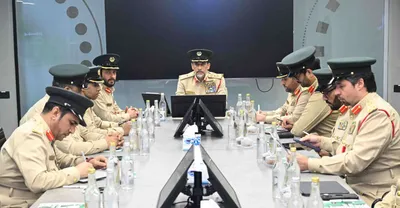
Dubai Police integrates AI and automation across 104 new operational projects
Law enforcement in Dubai has aggressively expanded its use of artificial intelligence, rolling out over a hundred strategic tech initiatives in just one year. The move signals a massive shift toward automated public services and policing operations.
Last scored March 14, 2026 · Based on BLS employment data and O*NET task analysis