Atmospheric and Space Scientists
Investigate atmospheric phenomena and interpret meteorological data, gathered by surface and air stations, satellites, and radar to prepare reports and forecasts for public and other uses. Includes weather analysts and forecasters whose functions require the detailed knowledge of meteorology.
How AI Impacts Each Task
27 tasks analyzed
Broadcast weather conditions, forecasts, or severe weather warnings to the public via television, radio, or the Internet or provide this information to the news media.
Prepare weather reports or maps for analysis, distribution, or use in weather broadcasts, using computer graphics.
Interpret data, reports, maps, photographs, or charts to predict long- or short-range weather conditions, using computer models and knowledge of climate theory, physics, and mathematics.
Develop or use mathematical or computer models for weather forecasting.
Gather data from sources such as surface or upper air stations, satellites, weather bureaus, or radar for use in meteorological reports or forecasts.
Prepare forecasts or briefings to meet the needs of industry, business, government, or other groups.
Measure wind, temperature, and humidity in the upper atmosphere, using weather balloons.
Conduct numerical simulations of climate conditions to understand and predict global or regional weather patterns.
Direct forecasting services at weather stations or at radio or television broadcasting facilities.
Formulate predictions by interpreting environmental data, such as meteorological, atmospheric, oceanic, paleoclimate, climate, or related information.
Prepare scientific atmospheric or climate reports, articles, or texts.
Perform managerial duties, such as creating work schedules, creating or implementing staff training, matching staff expertise to situations, or analyzing performance of offices.
Consult with other offices, agencies, professionals, or researchers regarding the use and interpretation of climatological information for weather predictions and warnings.
Conduct meteorological research into the processes or determinants of atmospheric phenomena, weather, or climate.
Analyze historical climate information, such as precipitation or temperature records, to help predict future weather or climate trends.
Analyze climate data sets, using techniques such as geophysical fluid dynamics, data assimilation, or numerical modeling.
Design or develop new equipment or methods for meteorological data collection, remote sensing, or related applications.
Teach college-level courses on topics such as atmospheric and space science, meteorology, or global climate change.
Apply meteorological knowledge to issues such as global warming, pollution control, or ozone depletion.
Research the impact of industrial projects or pollution on climate, air quality, or weather phenomena.
Create visualizations to illustrate historical or future changes in the Earth's climate, using paleoclimate or climate geographic information systems (GIS) databases.
Conduct wind assessment, integration, or validation studies.
Collect air samples from planes or ships over land or sea to study atmospheric composition.
Estimate or predict the effects of global warming over time for specific geographic regions.
Speak to the public to discuss weather topics or answer questions.
Develop and deliver training on weather topics.
Develop computer programs to collect meteorological data or to present meteorological information.
| Task | AI Capability | Risk | Time % | |
|---|---|---|---|---|
| Broadcast weather conditions, forecasts, or severe weather warnings to the public via television, radio, or the Internet or provide this information to the news media. | 40Estimated | 31.0% | 4% | |
| Prepare weather reports or maps for analysis, distribution, or use in weather broadcasts, using computer graphics. | 56.57Observed | 71.8% | 4% | |
| Interpret data, reports, maps, photographs, or charts to predict long- or short-range weather conditions, using computer models and knowledge of climate theory, physics, and mathematics. | 56.35Observed | 49.5% | 8% | |
| Develop or use mathematical or computer models for weather forecasting. | 85Estimated | 61.0% | 7% | |
| Gather data from sources such as surface or upper air stations, satellites, weather bureaus, or radar for use in meteorological reports or forecasts. | 49.78Observed | 69.1% | 6% | |
| Prepare forecasts or briefings to meet the needs of industry, business, government, or other groups. | 70Estimated | 55.0% | 6% | |
| Measure wind, temperature, and humidity in the upper atmosphere, using weather balloons. | 35Estimated | 47.0% | 3% | |
| Conduct numerical simulations of climate conditions to understand and predict global or regional weather patterns. | 80Estimated | 59.0% | 4% | |
| Direct forecasting services at weather stations or at radio or television broadcasting facilities. | 20Estimated | 23.0% | 3% | |
| Formulate predictions by interpreting environmental data, such as meteorological, atmospheric, oceanic, paleoclimate, climate, or related information. | 75Estimated | 57.0% | 5% | |
| Prepare scientific atmospheric or climate reports, articles, or texts. | 49Observed | 46.6% | 4% | |
| Perform managerial duties, such as creating work schedules, creating or implementing staff training, matching staff expertise to situations, or analyzing performance of offices. | 30Estimated | 27.0% | 3% | |
| Consult with other offices, agencies, professionals, or researchers regarding the use and interpretation of climatological information for weather predictions and warnings. | 20Estimated | 23.0% | 3% | |
| Conduct meteorological research into the processes or determinants of atmospheric phenomena, weather, or climate. | 60.42Observed | 51.2% | 4% | |
| Analyze historical climate information, such as precipitation or temperature records, to help predict future weather or climate trends. | 75Estimated | 57.0% | 4% | |
| Analyze climate data sets, using techniques such as geophysical fluid dynamics, data assimilation, or numerical modeling. | 70Estimated | 55.0% | 4% | |
| Design or develop new equipment or methods for meteorological data collection, remote sensing, or related applications. | 62.22Observed | 51.9% | 3% | |
| Teach college-level courses on topics such as atmospheric and space science, meteorology, or global climate change. | 30Estimated | 27.0% | 2% | |
| Apply meteorological knowledge to issues such as global warming, pollution control, or ozone depletion. | 60Estimated | 51.0% | 3% | |
| Research the impact of industrial projects or pollution on climate, air quality, or weather phenomena. | 60Estimated | 51.0% | 3% | |
| Create visualizations to illustrate historical or future changes in the Earth's climate, using paleoclimate or climate geographic information systems (GIS) databases. | 70Estimated | 55.0% | 3% | |
| Conduct wind assessment, integration, or validation studies. | 65Estimated | 53.0% | 2% | |
| Collect air samples from planes or ships over land or sea to study atmospheric composition. | 10Estimated | 13.0% | 2% | |
| Estimate or predict the effects of global warming over time for specific geographic regions. | 70Estimated | 55.0% | 3% | |
| Speak to the public to discuss weather topics or answer questions. | 30Estimated | 27.0% | 2% | |
| Develop and deliver training on weather topics. | 40Estimated | 31.0% | 2% | |
| Develop computer programs to collect meteorological data or to present meteorological information. | 75Estimated | 57.0% | 3% |
Skill Impact Analysis
AI-Vulnerable Skills (6)
High reliance on Mathematics is a risk area. Consider developing complementary AI-resistant skills to maintain value.
High reliance on Reading Comprehension is a risk area. Consider developing complementary AI-resistant skills to maintain value.
High reliance on Information Ordering is a risk area. Consider developing complementary AI-resistant skills to maintain value.
Mathematics is AI-vulnerable but has moderate importance in this role. AI tools may handle this; focus on higher-value skills.
Memorization is AI-vulnerable but has moderate importance in this role. AI tools may handle this; focus on higher-value skills.
Programming is AI-vulnerable but has moderate importance in this role. AI tools may handle this; focus on higher-value skills.
AI-Resistant Skills (11)
Adaptability/Flexibility is AI-resistant — strengthening this skill provides durable career protection.
Complex Problem Solving is AI-resistant — strengthening this skill provides durable career protection.
Leadership is AI-resistant — strengthening this skill provides durable career protection.
Instructing is AI-resistant — strengthening this skill provides durable career protection.
Social Perceptiveness is AI-resistant — strengthening this skill provides durable career protection.
Service Orientation is AI-resistant — strengthening this skill provides durable career protection.
Coordination is AI-resistant — strengthening this skill provides durable career protection.
Persuasion is AI-resistant — strengthening this skill provides durable career protection.
Recommended Courses
Courses matched to Atmospheric and Space Scientists skill gaps, ranked by relevance to your displacement risk profile.
Get personalized recommendations. Answer a few questions about your experience and skills to get course suggestions tailored specifically to you.
Upskill to Reduce Risk
Courses addressing your most AI-vulnerable skills
SQL Fundamentals Skill Track
by DataCamp
Estimated Impact
AI-Augmentation Tools
Learn to work alongside AI and boost your productivity
Creative Writing Specialization
by Wesleyan University
Estimated Impact
Strengthen Your Edge
Double down on skills AI can't replicate
Design Patterns in C# and .NET
by Pluralsight
Estimated Impact
We may earn a commission when you enroll through our links, at no extra cost to you. This helps fund the Takeover Tracker.
Risk reduction and salary impact are estimates based on skill gap analysis, course relevance, and labor market data. Actual results vary by individual circumstance.
Alternate Career Paths
See all transitionsAdvertising and Promotions Managers
31%Higher risk than 43% of other occupations
Broadcast News Analysts
30%Higher risk than 36% of other occupations
Cartographers and Photogrammetrists
47%Median salary: $78,380
Higher risk than 95% of other occupations
Chief Executives
26%Higher risk than 23% of other occupations
City and Regional Planning Aides
42%Median salary: $58,040
Higher risk than 86% of other occupations
Computer and Information Systems Managers
31%Higher risk than 45% of other occupations
General and Operations Managers
28%Higher risk than 29% of other occupations
Geographic Information Systems Technicians
38%Higher risk than 76% of other occupations
Geophysical Data Technicians
36%Higher risk than 69% of other occupations
Geoscientists, Except Hydrologists and Geographers
29%Median salary: $99,240
Higher risk than 33% of other occupations
Geospatial Information Scientists and Technologists
34%Higher risk than 64% of other occupations
Marketing Managers
30%Higher risk than 38% of other occupations
Remote Sensing Scientists and Technologists
34%Median salary: $117,960
Higher risk than 64% of other occupations
Sales Managers
25%Higher risk than 20% of other occupations
Social Science Research Assistants
43%Median salary: $58,040
Higher risk than 88% of other occupations
Software Developers, Systems Software
35%Higher risk than 67% of other occupations
Score History
Risk score over 2 scoring runs
overall change
Education & Training
Percentage of workers at each education and training level
Education Level
Prior Experience Needed
Work experience required to enter this job
Training Provided After Hiring
How long it typically takes to learn on the job
Related News
Recent articles about AI affecting this occupation
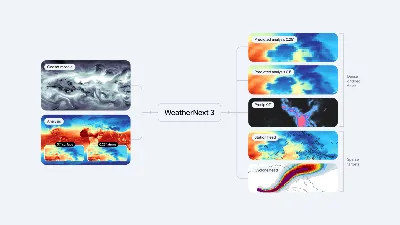
Google's deep learning weather model signals a shift in meteorology jobs
WeatherNext 3 will integrate deep learning directly into Google Search and Maps, bypassing traditional forecasting methods. This technological leap threatens to displace traditional meteorologists by automating complex predictions.
Last scored March 14, 2026 · Based on BLS employment data and O*NET task analysis