General and Operations Managers
Plan, direct, or coordinate the operations of public or private sector organizations. Duties and responsibilities include formulating policies, managing daily operations, and planning the use of materials and human resources, but are too diverse and general in nature to be classified in any one functional area of management or administration, such as personnel, purchasing, or administrative services.
How AI Impacts Each Task
17 tasks analyzed
Review financial statements, sales or activity reports, or other performance data to measure productivity or goal achievement or to identify areas needing cost reduction or program improvement.
Direct and coordinate activities of businesses or departments concerned with the production, pricing, sales, or distribution of products.
Direct administrative activities directly related to making products or providing services.
Prepare staff work schedules and assign specific duties.
Set prices or credit terms for goods or services based on forecasts of customer demand.
Monitor suppliers to ensure that they efficiently and effectively provide needed goods or services within budgetary limits.
Direct or coordinate financial or budget activities to fund operations, maximize investments, or increase efficiency.
Manage the movement of goods into and out of production facilities to ensure efficiency, effectiveness, or sustainability of operations.
Perform sales floor work, such as greeting or assisting customers, stocking shelves, or taking inventory.
Establish or implement departmental policies, goals, objectives, or procedures in conjunction with board members, organization officials, or staff members.
Perform personnel functions such as selection, training, or evaluation.
Plan or direct activities such as sales promotions that require coordination with other department managers.
Develop or implement product-marketing strategies, including advertising campaigns or sales promotions.
Recommend locations for new facilities or oversee the remodeling or renovating of current facilities.
Implement or oversee environmental management or sustainability programs addressing issues such as recycling, conservation, or waste management.
Direct non-merchandising departments of businesses, such as advertising or purchasing.
Plan store layouts or design displays.
| Task | AI Capability | Risk | Time % | |
|---|---|---|---|---|
| Review financial statements, sales or activity reports, or other performance data to measure productivity or goal achievement or to identify areas needing cost reduction or program improvement. | 53.25Observed | 48.3% | 10% | |
| Direct and coordinate activities of businesses or departments concerned with the production, pricing, sales, or distribution of products. | 20Estimated | 23.0% | 15% | |
| Direct administrative activities directly related to making products or providing services. | 20Estimated | 23.0% | 10% | |
| Prepare staff work schedules and assign specific duties. | 90Estimated | 85.2% | 5% | |
| Set prices or credit terms for goods or services based on forecasts of customer demand. | 55Observed | 49.0% | 4% | |
| Monitor suppliers to ensure that they efficiently and effectively provide needed goods or services within budgetary limits. | 54.7Observed | 71.1% | 5% | |
| Direct or coordinate financial or budget activities to fund operations, maximize investments, or increase efficiency. | 60Estimated | 51.0% | 8% | |
| Manage the movement of goods into and out of production facilities to ensure efficiency, effectiveness, or sustainability of operations. | 92Estimated | 86.0% | 5% | |
| Perform sales floor work, such as greeting or assisting customers, stocking shelves, or taking inventory. | 10Estimated | 19.0% | 4% | |
| Establish or implement departmental policies, goals, objectives, or procedures in conjunction with board members, organization officials, or staff members. | 35Estimated | 41.0% | 8% | |
| Perform personnel functions such as selection, training, or evaluation. | 30Estimated | 27.0% | 8% | |
| Plan or direct activities such as sales promotions that require coordination with other department managers. | 20Estimated | 23.0% | 5% | |
| Develop or implement product-marketing strategies, including advertising campaigns or sales promotions. | 63.85Observed | 52.5% | 4% | |
| Recommend locations for new facilities or oversee the remodeling or renovating of current facilities. | 50Estimated | 47.0% | 3% | |
| Implement or oversee environmental management or sustainability programs addressing issues such as recycling, conservation, or waste management. | 50Estimated | 47.0% | 2% | |
| Direct non-merchandising departments of businesses, such as advertising or purchasing. | 30Estimated | 27.0% | 2% | |
| Plan store layouts or design displays. | 60Estimated | 51.0% | 2% |
Skill Impact Analysis
AI-Vulnerable Skills (6)
High reliance on Reading Comprehension is a risk area. Consider developing complementary AI-resistant skills to maintain value.
High reliance on Mathematics is a risk area. Consider developing complementary AI-resistant skills to maintain value.
High reliance on Information Ordering is a risk area. Consider developing complementary AI-resistant skills to maintain value.
Mathematics is AI-vulnerable but has moderate importance in this role. AI tools may handle this; focus on higher-value skills.
Memorization is AI-vulnerable but has moderate importance in this role. AI tools may handle this; focus on higher-value skills.
Programming is AI-vulnerable but has moderate importance in this role. AI tools may handle this; focus on higher-value skills.
AI-Resistant Skills (11)
Leadership is AI-resistant — strengthening this skill provides durable career protection.
Adaptability/Flexibility is AI-resistant — strengthening this skill provides durable career protection.
Coordination is AI-resistant — strengthening this skill provides durable career protection.
Social Perceptiveness is AI-resistant — strengthening this skill provides durable career protection.
Negotiation is AI-resistant — strengthening this skill provides durable career protection.
Complex Problem Solving is AI-resistant — strengthening this skill provides durable career protection.
Persuasion is AI-resistant — strengthening this skill provides durable career protection.
Service Orientation is AI-resistant — strengthening this skill provides durable career protection.
Recommended Courses
Courses matched to General and Operations Managers skill gaps, ranked by relevance to your displacement risk profile.
Get personalized recommendations. Answer a few questions about your experience and skills to get course suggestions tailored specifically to you.
Upskill to Reduce Risk
Courses addressing your most AI-vulnerable skills
Google Technical Writing
by Google
Estimated Impact
AI-Augmentation Tools
Learn to work alongside AI and boost your productivity
Cybersecurity Fundamentals Path
by Pluralsight
Estimated Impact
Strengthen Your Edge
Double down on skills AI can't replicate
Leading People and Teams Specialization
by University of Michigan
Estimated Impact
We may earn a commission when you enroll through our links, at no extra cost to you. This helps fund the Takeover Tracker.
Risk reduction and salary impact are estimates based on skill gap analysis, course relevance, and labor market data. Actual results vary by individual circumstance.
Alternate Career Paths
See all transitionsAdministrative Services Managers
36%Higher risk than 69% of other occupations
Advertising and Promotions Managers
31%Higher risk than 43% of other occupations
Chief Executives
26%Higher risk than 23% of other occupations
Computer and Information Systems Managers
31%Higher risk than 45% of other occupations
Financial Managers
First-Line Supervisors of Office and Administrative Support Workers
34%Median salary: $66,140
Higher risk than 62% of other occupations
First-Line Supervisors of Transportation and Material-Moving Machine and Vehicle Operators
30%Higher risk than 41% of other occupations
Food Service Managers
36%Median salary: $65,310
Higher risk than 69% of other occupations
Gaming Managers
39%Median salary: $85,580
Higher risk than 78% of other occupations
Lodging Managers
31%Median salary: $68,130
Higher risk than 48% of other occupations
Logistics Managers
32%Median salary: $102,010
Higher risk than 50% of other occupations
Marketing Managers
30%Higher risk than 38% of other occupations
Purchasing Managers
34%Median salary: $139,510
Higher risk than 60% of other occupations
Sales Managers
25%Higher risk than 20% of other occupations
Storage and Distribution Managers
34%Median salary: $102,010
Higher risk than 62% of other occupations
Wholesale and Retail Buyers, Except Farm Products
29%Higher risk than 35% of other occupations
Score History
Risk score over 3 scoring runs
overall change
Education & Training
Percentage of workers at each education and training level
Education Level
Prior Experience Needed
Work experience required to enter this job
Training Provided After Hiring
How long it typically takes to learn on the job
Related News
Recent articles about AI affecting this occupation

Warner Music streamlines leadership, ousting publishing COO
Warner Music Group is eliminating the COO role at its publishing division, Warner Chappell Music. Carianne Marshall will exit at the end of the month as part of a broader restructuring effort.
MBA Programs Race to Adapt to the AI Era
Top business schools are overhauling their curricula to integrate artificial intelligence, ensuring future executives possess the technical fluency required to manage automated workforces.

How Founders Can Use AI Without Becoming Too Dependent On It
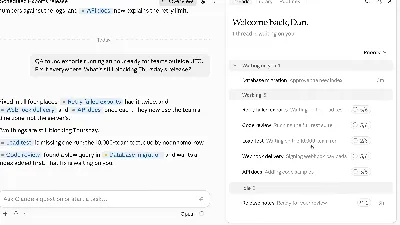
Anthropic's new Claude update lets AI agents autonomously manage parallel tasks
Anthropic has upgraded its platform to allow multiple AI agents to share memory and execute complex workflows simultaneously. This capability pushes AI from simple chatbots to autonomous project managers capable of handling parallel duties.
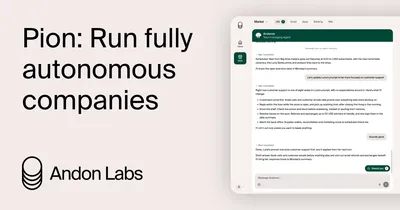
Pion, an agent designed to run any company autonomously
A new autonomous AI agent claims to be capable of managing entire business operations without human intervention. While still experimental, it signals a shift from AI as a co-pilot to AI as a complete management replacement.
Last scored March 14, 2026 · Based on BLS employment data and O*NET task analysis