Biochemists and Biophysicists
Study the chemical composition or physical principles of living cells and organisms, their electrical and mechanical energy, and related phenomena. May conduct research to further understanding of the complex chemical combinations and reactions involved in metabolism, reproduction, growth, and heredity. May determine the effects of foods, drugs, serums, hormones, and other substances on tissues and vital processes of living organisms.
How AI Impacts Each Task
24 tasks analyzed
Study physical principles of living cells or organisms and their electrical or mechanical energy, applying methods and knowledge of mathematics, physics, chemistry, or biology.
Share research findings by writing scientific articles or by making presentations at scientific conferences.
Prepare reports or recommendations, based upon research outcomes.
Teach or advise undergraduate or graduate students or supervise their research.
Manage laboratory teams or monitor the quality of a team's work.
Determine the three-dimensional structure of biological macromolecules.
Isolate, analyze, or synthesize vitamins, hormones, allergens, minerals, or enzymes and determine their effects on body functions.
Develop new methods to study the mechanisms of biological processes.
Study the mutations in organisms that lead to cancer or other diseases.
Study the chemistry of living processes, such as cell development, breathing and digestion, or living energy changes, such as growth, aging, or death.
Investigate the nature, composition, or expression of genes or research how genetic engineering can impact these processes.
Design or perform experiments with equipment such as lasers, accelerators, or mass spectrometers.
Study spatial configurations of submicroscopic molecules, such as proteins, using x-rays or electron microscopes.
Produce pharmaceutically or industrially useful proteins, using recombinant DNA technology.
Develop or execute tests to detect diseases, genetic disorders, or other abnormalities.
Research the chemical effects of substances, such as drugs, serums, hormones, or food, on tissues or vital processes.
Examine the molecular or chemical aspects of immune system functioning.
Research transformations of substances in cells, using atomic isotopes.
Develop or test new drugs or medications intended for commercial distribution.
Design or build laboratory equipment needed for special research projects.
Develop methods to process, store, or use foods, drugs, or chemical compounds.
Research how characteristics of plants or animals are carried through successive generations.
Prepare pharmaceutical compounds for commercial distribution.
Write grant proposals to obtain funding for research.
| Task | AI Capability | Risk | Time % | |
|---|---|---|---|---|
| Study physical principles of living cells or organisms and their electrical or mechanical energy, applying methods and knowledge of mathematics, physics, chemistry, or biology. | 64.28Observed | 52.7% | 8% | |
| Share research findings by writing scientific articles or by making presentations at scientific conferences. | 59.82Observed | 50.9% | 6% | |
| Prepare reports or recommendations, based upon research outcomes. | 58.7Observed | 50.5% | 5% | |
| Teach or advise undergraduate or graduate students or supervise their research. | 56.7Observed | 37.7% | 6% | |
| Manage laboratory teams or monitor the quality of a team's work. | 20Estimated | 23.0% | 5% | |
| Determine the three-dimensional structure of biological macromolecules. | 90Estimated | 63.0% | 4% | |
| Isolate, analyze, or synthesize vitamins, hormones, allergens, minerals, or enzymes and determine their effects on body functions. | 35Estimated | 41.0% | 5% | |
| Develop new methods to study the mechanisms of biological processes. | 65.15Observed | 53.1% | 5% | |
| Study the mutations in organisms that lead to cancer or other diseases. | 49.28Observed | 46.7% | 4% | |
| Study the chemistry of living processes, such as cell development, breathing and digestion, or living energy changes, such as growth, aging, or death. | 62.15Observed | 51.9% | 4% | |
| Investigate the nature, composition, or expression of genes or research how genetic engineering can impact these processes. | 52.2Observed | 47.9% | 4% | |
| Design or perform experiments with equipment such as lasers, accelerators, or mass spectrometers. | 30Estimated | 39.0% | 5% | |
| Study spatial configurations of submicroscopic molecules, such as proteins, using x-rays or electron microscopes. | 50Estimated | 47.0% | 4% | |
| Produce pharmaceutically or industrially useful proteins, using recombinant DNA technology. | 60.08Observed | 51.0% | 4% | |
| Develop or execute tests to detect diseases, genetic disorders, or other abnormalities. | 60Estimated | 51.0% | 4% | |
| Research the chemical effects of substances, such as drugs, serums, hormones, or food, on tissues or vital processes. | 66.67Observed | 53.7% | 4% | |
| Examine the molecular or chemical aspects of immune system functioning. | 60Estimated | 51.0% | 3% | |
| Research transformations of substances in cells, using atomic isotopes. | 40Estimated | 43.0% | 3% | |
| Develop or test new drugs or medications intended for commercial distribution. | 60Estimated | 51.0% | 3% | |
| Design or build laboratory equipment needed for special research projects. | 20Estimated | 17.0% | 3% | |
| Develop methods to process, store, or use foods, drugs, or chemical compounds. | 53.33Observed | 48.3% | 3% | |
| Research how characteristics of plants or animals are carried through successive generations. | 53.45Observed | 48.4% | 3% | |
| Prepare pharmaceutical compounds for commercial distribution. | 70Estimated | 61.0% | 2% | |
| Write grant proposals to obtain funding for research. | 70Estimated | 55.0% | 5% |
Skill Impact Analysis
AI-Vulnerable Skills (6)
High reliance on Mathematics is a risk area. Consider developing complementary AI-resistant skills to maintain value.
High reliance on Reading Comprehension is a risk area. Consider developing complementary AI-resistant skills to maintain value.
High reliance on Information Ordering is a risk area. Consider developing complementary AI-resistant skills to maintain value.
High reliance on Mathematics is a risk area. Consider developing complementary AI-resistant skills to maintain value.
Memorization is AI-vulnerable but has moderate importance in this role. AI tools may handle this; focus on higher-value skills.
Programming is AI-vulnerable but has moderate importance in this role. AI tools may handle this; focus on higher-value skills.
AI-Resistant Skills (11)
Adaptability/Flexibility is AI-resistant — strengthening this skill provides durable career protection.
Complex Problem Solving is AI-resistant — strengthening this skill provides durable career protection.
Instructing is AI-resistant — strengthening this skill provides durable career protection.
Leadership is AI-resistant — strengthening this skill provides durable career protection.
Social Perceptiveness is AI-resistant — strengthening this skill provides durable career protection.
Coordination is AI-resistant — strengthening this skill provides durable career protection.
Persuasion is AI-resistant — strengthening this skill provides durable career protection.
Service Orientation is AI-resistant — strengthening this skill provides durable career protection.
Recommended Courses
Courses matched to Biochemists and Biophysicists skill gaps, ranked by relevance to your displacement risk profile.
Get personalized recommendations. Answer a few questions about your experience and skills to get course suggestions tailored specifically to you.
Upskill to Reduce Risk
Courses addressing your most AI-vulnerable skills
Machine Learning Specialization
by Stanford / DeepLearning.AI
Estimated Impact
AI-Augmentation Tools
Learn to work alongside AI and boost your productivity
Creative Writing Specialization
by Wesleyan University
Estimated Impact
Strengthen Your Edge
Double down on skills AI can't replicate
Design Patterns in C# and .NET
by Pluralsight
Estimated Impact
We may earn a commission when you enroll through our links, at no extra cost to you. This helps fund the Takeover Tracker.
Risk reduction and salary impact are estimates based on skill gap analysis, course relevance, and labor market data. Actual results vary by individual circumstance.
Alternate Career Paths
See all transitionsAdvertising and Promotions Managers
31%Higher risk than 43% of other occupations
Biochemical Engineers
31%Median salary: $117,750
Higher risk than 43% of other occupations
Biologists
30%Median salary: $93,340
Higher risk than 39% of other occupations
Chemistry Teachers, Postsecondary
35%Median salary: $86,220
Higher risk than 65% of other occupations
Chief Executives
26%Higher risk than 23% of other occupations
Computer and Information Systems Managers
31%Higher risk than 45% of other occupations
General and Operations Managers
28%Higher risk than 29% of other occupations
Geneticists
30%Median salary: $93,330
Higher risk than 41% of other occupations
Marketing Managers
30%Higher risk than 38% of other occupations
Materials Scientists
34%Median salary: $104,160
Higher risk than 63% of other occupations
Medical Scientists, Except Epidemiologists
30%Median salary: $100,590
Higher risk than 40% of other occupations
Microbiologists
29%Median salary: $87,330
Higher risk than 34% of other occupations
Molecular and Cellular Biologists
33%Median salary: $93,330
Higher risk than 56% of other occupations
Natural Sciences Managers
27%Median salary: $161,180
Higher risk than 26% of other occupations
Physicists
29%Median salary: $166,290
Higher risk than 35% of other occupations
Sales Managers
25%Higher risk than 20% of other occupations
Score History
Risk score over 2 scoring runs
overall change
Education & Training
Percentage of workers at each education and training level
Education Level
Prior Experience Needed
Work experience required to enter this job
Training Provided After Hiring
How long it typically takes to learn on the job
Related News
Recent articles about AI affecting this occupation
AI's Role as Research Assistant Calls into Question Ownership of Scientific Discoveries
As AI models advance to generating genuinely novel scientific results, the research sector faces a looming intellectual property crisis. Determining whether credit belongs to the human researcher or the AI company remains unresolved.
Novo Nordisk deploys Anthropic's Claude to assist drug research teams
The integration of Claude into Novo Nordisk's R&D pipeline highlights a growing demand for scientists who can collaborate with LLMs. This deployment will automate routine data analysis, forcing researchers to focus on higher-level strategic work.
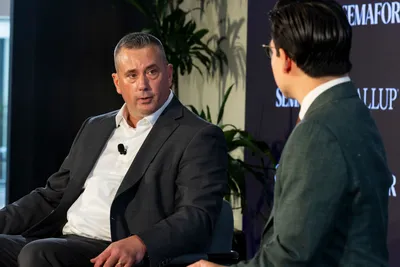
Google-Backed Isomorphic Labs Keeps AI Drug Discovery In-House
Chris Butler confirmed that the Google-backed company's proprietary AI models for drug discovery remain strictly internal. The decision highlights how fiercely biotech firms are guarding the algorithms reshaping research roles.
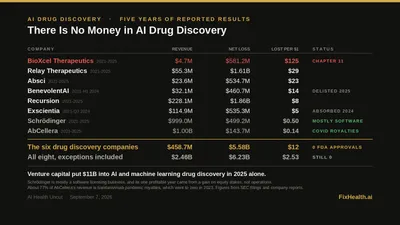
AI Drug Discovery Sector Bleeds $5.5B With Zero Approvals
Despite $5.58 billion in losses over five years, the industry hasn't produced a single approved AI-discovered drug. A recent failed Novartis Phase 3 trial proves that generating molecules isn't the bottleneck in pharmaceutical success.
Last scored March 14, 2026 · Based on BLS employment data and O*NET task analysis