Industrial Production Managers
Plan, direct, or coordinate the work activities and resources necessary for manufacturing products in accordance with cost, quality, and quantity specifications.
How AI Impacts Each Task
14 tasks analyzed
Review processing schedules or production orders to make decisions concerning inventory requirements, staffing requirements, work procedures, or duty assignments, considering budgetary limitations and time constraints.
Direct or coordinate production, processing, distribution, or marketing activities of industrial organizations.
Develop or implement production tracking or quality control systems, analyzing production, quality control, maintenance, or other operational reports, to detect production problems.
Review operations and confer with technical or administrative staff to resolve production or processing problems.
Hire, train, evaluate, or discharge staff or resolve personnel grievances.
Prepare and maintain production reports or personnel records.
Set and monitor product standards, examining samples of raw products or directing testing during processing, to ensure finished products are of prescribed quality.
Develop budgets or approve expenditures for supplies, materials, or human resources, ensuring that materials, labor, or equipment are used efficiently to meet production targets.
Initiate or coordinate inventory or cost control programs.
Coordinate or recommend procedures for facility or equipment maintenance or modification, including the replacement of machines.
Review plans and confer with research or support staff to develop new products or processes.
Institute employee suggestion or involvement programs.
Negotiate materials prices with suppliers.
Maintain current knowledge of the quality control field, relying on current literature pertaining to materials use, technological advances, or statistical studies.
| Task | AI Capability | Risk | Time % | |
|---|---|---|---|---|
| Review processing schedules or production orders to make decisions concerning inventory requirements, staffing requirements, work procedures, or duty assignments, considering budgetary limitations and time constraints. | 65Estimated | 53.0% | 15% | |
| Direct or coordinate production, processing, distribution, or marketing activities of industrial organizations. | 30Estimated | 27.0% | 15% | |
| Develop or implement production tracking or quality control systems, analyzing production, quality control, maintenance, or other operational reports, to detect production problems. | 70Estimated | 55.0% | 10% | |
| Review operations and confer with technical or administrative staff to resolve production or processing problems. | 30Estimated | 27.0% | 10% | |
| Hire, train, evaluate, or discharge staff or resolve personnel grievances. | 20Estimated | 23.0% | 8% | |
| Prepare and maintain production reports or personnel records. | 92Estimated | 86.0% | 8% | |
| Set and monitor product standards, examining samples of raw products or directing testing during processing, to ensure finished products are of prescribed quality. | 60Estimated | 51.0% | 8% | |
| Develop budgets or approve expenditures for supplies, materials, or human resources, ensuring that materials, labor, or equipment are used efficiently to meet production targets. | 55Estimated | 49.0% | 6% | |
| Initiate or coordinate inventory or cost control programs. | 65Estimated | 53.0% | 5% | |
| Coordinate or recommend procedures for facility or equipment maintenance or modification, including the replacement of machines. | 70Estimated | 55.0% | 4% | |
| Review plans and confer with research or support staff to develop new products or processes. | 50Estimated | 47.0% | 3% | |
| Institute employee suggestion or involvement programs. | 25Estimated | 25.0% | 3% | |
| Negotiate materials prices with suppliers. | 40Estimated | 31.0% | 3% | |
| Maintain current knowledge of the quality control field, relying on current literature pertaining to materials use, technological advances, or statistical studies. | 75Estimated | 57.0% | 2% |
Skill Impact Analysis
AI-Vulnerable Skills (6)
High reliance on Information Ordering is a risk area. Consider developing complementary AI-resistant skills to maintain value.
High reliance on Reading Comprehension is a risk area. Consider developing complementary AI-resistant skills to maintain value.
High reliance on Mathematics is a risk area. Consider developing complementary AI-resistant skills to maintain value.
High reliance on Mathematics is a risk area. Consider developing complementary AI-resistant skills to maintain value.
Memorization is AI-vulnerable but has moderate importance in this role. AI tools may handle this; focus on higher-value skills.
Programming is AI-vulnerable but has moderate importance in this role. AI tools may handle this; focus on higher-value skills.
AI-Resistant Skills (11)
Leadership is AI-resistant — strengthening this skill provides durable career protection.
Adaptability/Flexibility is AI-resistant — strengthening this skill provides durable career protection.
Coordination is AI-resistant — strengthening this skill provides durable career protection.
Complex Problem Solving is AI-resistant — strengthening this skill provides durable career protection.
Instructing is AI-resistant — strengthening this skill provides durable career protection.
Social Perceptiveness is AI-resistant — strengthening this skill provides durable career protection.
Persuasion is AI-resistant — strengthening this skill provides durable career protection.
Negotiation is AI-resistant — strengthening this skill provides durable career protection.
Recommended Courses
Courses matched to Industrial Production Managers skill gaps, ranked by relevance to your displacement risk profile.
Get personalized recommendations. Answer a few questions about your experience and skills to get course suggestions tailored specifically to you.
Upskill to Reduce Risk
Courses addressing your most AI-vulnerable skills
SQL Fundamentals Skill Track
by DataCamp
Estimated Impact
AI-Augmentation Tools
Learn to work alongside AI and boost your productivity
Cybersecurity Fundamentals Path
by Pluralsight
Estimated Impact
Strengthen Your Edge
Double down on skills AI can't replicate
Leading People and Teams Specialization
by University of Michigan
Estimated Impact
We may earn a commission when you enroll through our links, at no extra cost to you. This helps fund the Takeover Tracker.
Risk reduction and salary impact are estimates based on skill gap analysis, course relevance, and labor market data. Actual results vary by individual circumstance.
Alternate Career Paths
See all transitionsAdvertising and Promotions Managers
31%Higher risk than 43% of other occupations
Chief Executives
26%Higher risk than 23% of other occupations
Computer and Information Systems Managers
31%Higher risk than 45% of other occupations
First-Line Supervisors of Helpers, Laborers, and Material Movers, Hand
34%Higher risk than 62% of other occupations
First-Line Supervisors of Production and Operating Workers
35%Median salary: $71,190
Higher risk than 67% of other occupations
First-Line Supervisors of Transportation and Material-Moving Machine and Vehicle Operators
30%Higher risk than 41% of other occupations
Food Service Managers
36%Median salary: $65,310
Higher risk than 69% of other occupations
General and Operations Managers
28%Median salary: $102,950
Higher risk than 29% of other occupations
Industrial Engineering Technicians
42%Median salary: $64,790
Higher risk than 86% of other occupations
Industrial Engineers
36%Median salary: $101,140
Higher risk than 68% of other occupations
Logistics Managers
32%Median salary: $102,010
Higher risk than 50% of other occupations
Marketing Managers
30%Higher risk than 38% of other occupations
Power Distributors and Dispatchers
43%Median salary: $107,240
Higher risk than 87% of other occupations
Sales Managers
25%Higher risk than 20% of other occupations
Storage and Distribution Managers
34%Median salary: $102,010
Higher risk than 62% of other occupations
Score History
Risk score over 3 scoring runs
overall change
Education & Training
Percentage of workers at each education and training level
Education Level
Prior Experience Needed
Work experience required to enter this job
Training Provided After Hiring
How long it typically takes to learn on the job
Related News
Recent articles about AI affecting this occupation
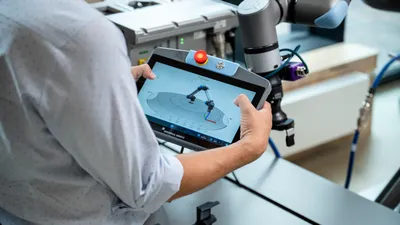
Universal Robots launches new AI platform to accelerate factory automation
The robotics manufacturer debuted its next-generation hardware designed specifically to integrate with artificial intelligence. This new platform will make it easier for manufacturers to deploy autonomous robots on factory floors.

AI startup CADDi raises $114M to automate manufacturing and supply chain roles
CADDi secured massive funding to eliminate physical bottlenecks in manufacturing by automating procurement and supply chain management. This signals a major shift toward replacing manual oversight roles in heavy industry with AI-driven systems.

Automotive Sector Expands AI Tasks, Threatening Manual Roles
Automakers are rapidly shifting from testing AI reliability to deploying agentic AI for broader operational tasks. This transition signals an upcoming reduction in human oversight roles as systems gain autonomy.
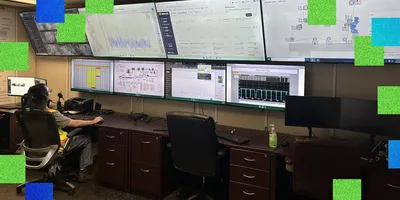
Domtar uses AI sensors to shift maintenance workers from reactive to proactive
Paper manufacturer Domtar deployed Waites' AI-assisted sensors to monitor machine reliability, fundamentally changing the daily workflows of its maintenance staff by reducing unexpected equipment downtime.
Last scored March 14, 2026 · Based on BLS employment data and O*NET task analysis