Pharmacy Technicians
Prepare medications under the direction of a pharmacist. May measure, mix, count out, label, and record amounts and dosages of medications according to prescription orders.
How AI Impacts Each Task
21 tasks analyzed
Receive written prescription or refill requests and verify that information is complete and accurate.
Answer telephones, responding to questions or requests.
Prepack bulk medicines, fill bottles with prescribed medications, and type and affix labels.
Prepare and process medical insurance claim forms and records.
Maintain proper storage and security conditions for drugs.
Assist customers by answering simple questions, locating items, or referring them to the pharmacist for medication information.
Price and file prescriptions that have been filled.
Establish or maintain patient profiles, including lists of medications taken by individual patients.
Order, label, and count stock of medications, chemicals, or supplies and enter inventory data into computer.
Receive and store incoming supplies, verify quantities against invoices, check for outdated medications in current inventory, and inform supervisors of stock needs and shortages.
Supply and monitor robotic machines that dispense medicine into containers and label the containers.
Transfer medication from vials to the appropriate number of sterile, disposable syringes, using aseptic techniques.
Mix pharmaceutical preparations, according to written prescriptions.
Operate cash registers to accept payment from customers.
Restock intravenous (IV) supplies and add measured drugs or nutrients to IV solutions under sterile conditions to prepare IV packs for various uses, such as chemotherapy medication.
Clean and help maintain equipment or work areas and sterilize glassware, according to prescribed methods.
Compute charges for medication or equipment dispensed to hospital patients and enter data in computer.
Deliver medications or pharmaceutical supplies to patients, nursing stations, or surgery.
Price stock and mark items for sale.
Maintain and merchandise home healthcare products or services.
Enter prescription information into computer databases.
| Task | AI Capability | Risk | Time % | |
|---|---|---|---|---|
| Receive written prescription or refill requests and verify that information is complete and accurate. | 85Estimated | 83.2% | 8% | |
| Answer telephones, responding to questions or requests. | 42.57Observed | 32.0% | 6% | |
| Prepack bulk medicines, fill bottles with prescribed medications, and type and affix labels. | 85Estimated | 67.0% | 10% | |
| Prepare and process medical insurance claim forms and records. | 50Observed | 69.2% | 6% | |
| Maintain proper storage and security conditions for drugs. | 45Estimated | 51.0% | 3% | |
| Assist customers by answering simple questions, locating items, or referring them to the pharmacist for medication information. | 40Estimated | 31.0% | 6% | |
| Price and file prescriptions that have been filled. | 95Estimated | 87.2% | 4% | |
| Establish or maintain patient profiles, including lists of medications taken by individual patients. | 90Estimated | 85.2% | 5% | |
| Order, label, and count stock of medications, chemicals, or supplies and enter inventory data into computer. | 87Estimated | 84.0% | 5% | |
| Receive and store incoming supplies, verify quantities against invoices, check for outdated medications in current inventory, and inform supervisors of stock needs and shortages. | 40Estimated | 49.0% | 5% | |
| Supply and monitor robotic machines that dispense medicine into containers and label the containers. | 35Estimated | 47.0% | 3% | |
| Transfer medication from vials to the appropriate number of sterile, disposable syringes, using aseptic techniques. | 40Estimated | 25.0% | 3% | |
| Mix pharmaceutical preparations, according to written prescriptions. | 45Estimated | 51.0% | 4% | |
| Operate cash registers to accept payment from customers. | 90Estimated | 85.2% | 5% | |
| Restock intravenous (IV) supplies and add measured drugs or nutrients to IV solutions under sterile conditions to prepare IV packs for various uses, such as chemotherapy medication. | 35Estimated | 23.0% | 3% | |
| Clean and help maintain equipment or work areas and sterilize glassware, according to prescribed methods. | 30Estimated | 45.0% | 3% | |
| Compute charges for medication or equipment dispensed to hospital patients and enter data in computer. | 95Estimated | 87.2% | 3% | |
| Deliver medications or pharmaceutical supplies to patients, nursing stations, or surgery. | 51.12Observed | 53.5% | 4% | |
| Price stock and mark items for sale. | 60Estimated | 57.0% | 3% | |
| Maintain and merchandise home healthcare products or services. | 40Estimated | 49.0% | 3% | |
| Enter prescription information into computer databases. | 92Estimated | 86.0% | 8% |
Skill Impact Analysis
AI-Vulnerable Skills (6)
High reliance on Reading Comprehension is a risk area. Consider developing complementary AI-resistant skills to maintain value.
High reliance on Information Ordering is a risk area. Consider developing complementary AI-resistant skills to maintain value.
High reliance on Mathematics is a risk area. Consider developing complementary AI-resistant skills to maintain value.
Mathematics is AI-vulnerable but has moderate importance in this role. AI tools may handle this; focus on higher-value skills.
Memorization is AI-vulnerable but has moderate importance in this role. AI tools may handle this; focus on higher-value skills.
Programming is AI-vulnerable but has moderate importance in this role. AI tools may handle this; focus on higher-value skills.
AI-Resistant Skills (11)
Adaptability/Flexibility is AI-resistant — strengthening this skill provides durable career protection.
Leadership is AI-resistant — strengthening this skill provides durable career protection.
Manual Dexterity is AI-resistant — strengthening this skill provides durable career protection.
Social Perceptiveness is AI-resistant — strengthening this skill provides durable career protection.
Service Orientation is AI-resistant — strengthening this skill provides durable career protection.
Complex Problem Solving is AI-resistant — strengthening this skill provides durable career protection.
Coordination is AI-resistant — strengthening this skill provides durable career protection.
Persuasion is AI-resistant — strengthening this skill provides durable career protection.
Recommended Courses
Courses matched to Pharmacy Technicians skill gaps, ranked by relevance to your displacement risk profile.
Get personalized recommendations. Answer a few questions about your experience and skills to get course suggestions tailored specifically to you.
Upskill to Reduce Risk
Courses addressing your most AI-vulnerable skills
SQL Fundamentals Skill Track
by DataCamp
Estimated Impact
AI-Augmentation Tools
Learn to work alongside AI and boost your productivity
Cybersecurity Fundamentals Path
by Pluralsight
Estimated Impact
Strengthen Your Edge
Double down on skills AI can't replicate
Inspired Leadership Through Emotional Intelligence
by Case Western Reserve University
Estimated Impact
We may earn a commission when you enroll through our links, at no extra cost to you. This helps fund the Takeover Tracker.
Risk reduction and salary impact are estimates based on skill gap analysis, course relevance, and labor market data. Actual results vary by individual circumstance.
Alternate Career Paths
See all transitionsAdvertising and Promotions Managers
31%Higher risk than 43% of other occupations
Chief Executives
26%Higher risk than 23% of other occupations
Computer and Information Systems Managers
31%Higher risk than 45% of other occupations
Dental Assistants
24%Median salary: $47,300
Higher risk than 17% of other occupations
Endoscopy Technicians
22%Median salary: $46,050
Higher risk than 10% of other occupations
General and Operations Managers
28%Higher risk than 29% of other occupations
Licensed Practical and Licensed Vocational Nurses
21%Median salary: $62,340
Higher risk than 9% of other occupations
Marketing Managers
30%Higher risk than 38% of other occupations
Medical Assistants
33%Median salary: $44,200
Higher risk than 58% of other occupations
Occupational Therapy Assistants
27%Median salary: $68,340
Higher risk than 24% of other occupations
Opticians, Dispensing
35%Median salary: $46,560
Higher risk than 65% of other occupations
Pharmacy Aides
45%Median salary: $37,000
Higher risk than 91% of other occupations
Physical Therapist Aides
24%Median salary: $34,520
Higher risk than 17% of other occupations
Physical Therapist Assistants
23%Median salary: $65,510
Higher risk than 12% of other occupations
Sales Managers
25%Higher risk than 20% of other occupations
Veterinary Assistants and Laboratory Animal Caretakers
25%Median salary: $37,320
Higher risk than 20% of other occupations
Score History
Risk score over 2 scoring runs
overall change
Education & Training
Percentage of workers at each education and training level
Education Level
Prior Experience Needed
Work experience required to enter this job
Training Provided After Hiring
How long it typically takes to learn on the job
Related News
Recent articles about AI affecting this occupation
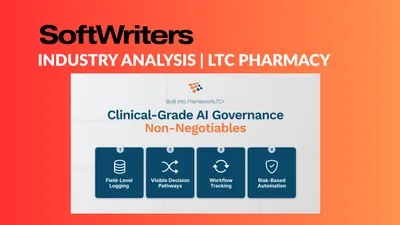
AI Clinical Decisions in Pharmacies Demand New Human Oversight Roles
As artificial intelligence begins making clinical decisions in long-term care pharmacies, the need for human oversight is becoming critical. Relying on third-party automation introduces massive compliance risks without proper governance.
AI Agents Automating Healthcare Admin Fuel Forus's $3B Valuation
Forus secured $150M to expand AI agents that handle insurance coverage and drug fulfillment. This massive investment signals an accelerated push to automate healthcare administration roles traditionally held by human navigators.

Pharmacy Automation Conference Highlights AI's Growing Role
The American Society for Automation in Pharmacy is gathering leaders to showcase new technologies reshaping the industry. The upcoming event will highlight how automation is shifting daily responsibilities for pharmacists and technicians.
Last scored March 14, 2026 · Based on BLS employment data and O*NET task analysis