Medical Transcriptionists
Transcribe medical reports recorded by physicians and other healthcare practitioners using various electronic devices, covering office visits, emergency room visits, diagnostic imaging studies, operations, chart reviews, and final summaries. Transcribe dictated reports and translate abbreviations into fully understandable form. Edit as necessary and return reports in either printed or electronic form for review and signature, or correction.
How AI Impacts Each Task
15 tasks analyzed
Take dictation using shorthand, a stenotype machine, or headsets and transcribing machines.
Return dictated reports in printed or electronic form for physician's review, signature, and corrections and for inclusion in patients' medical records.
Perform data entry and data retrieval services, providing data for inclusion in medical records and for transmission to physicians.
Review and edit transcribed reports or dictated material for spelling, grammar, clarity, consistency, and proper medical terminology.
Transcribe dictation for a variety of medical reports, such as patient histories, physical examinations, emergency room visits, operations, chart reviews, consultation, or discharge summaries.
Distinguish between homonyms and recognize inconsistencies and mistakes in medical terms, referring to dictionaries, drug references, and other sources on anatomy, physiology, and medicine.
Translate medical jargon and abbreviations into their expanded forms to ensure the accuracy of patient and health care facility records.
Produce medical reports, correspondence, records, patient-care information, statistics, medical research, and administrative material.
Identify mistakes in reports and check with doctors to obtain the correct information.
Set up and maintain medical files and databases, including records such as x-ray, lab, and procedure reports, medical histories, diagnostic workups, admission and discharge summaries, and clinical resumes.
Perform a variety of clerical and office tasks, such as handling incoming and outgoing mail, completing and submitting insurance claims, typing, filing, or operating office machines.
Receive patients, schedule appointments, and maintain patient records.
Answer inquiries concerning the progress of medical cases, within the limits of confidentiality laws.
Decide which information should be included or excluded in reports.
Receive and screen telephone calls and visitors.
| Task | AI Capability | Risk | Time % | |
|---|---|---|---|---|
| Take dictation using shorthand, a stenotype machine, or headsets and transcribing machines. | 21.35Observed | 57.7% | 10% | |
| Return dictated reports in printed or electronic form for physician's review, signature, and corrections and for inclusion in patients' medical records. | 95Estimated | 87.2% | 5% | |
| Perform data entry and data retrieval services, providing data for inclusion in medical records and for transmission to physicians. | 35.32Observed | 63.3% | 5% | |
| Review and edit transcribed reports or dictated material for spelling, grammar, clarity, consistency, and proper medical terminology. | 43.97Observed | 66.8% | 15% | |
| Transcribe dictation for a variety of medical reports, such as patient histories, physical examinations, emergency room visits, operations, chart reviews, consultation, or discharge summaries. | 41.45Observed | 65.8% | 20% | |
| Distinguish between homonyms and recognize inconsistencies and mistakes in medical terms, referring to dictionaries, drug references, and other sources on anatomy, physiology, and medicine. | 47.05Observed | 45.8% | 10% | |
| Translate medical jargon and abbreviations into their expanded forms to ensure the accuracy of patient and health care facility records. | 92Estimated | 86.0% | 5% | |
| Produce medical reports, correspondence, records, patient-care information, statistics, medical research, and administrative material. | 52.05Observed | 70.0% | 5% | |
| Identify mistakes in reports and check with doctors to obtain the correct information. | 40Estimated | 31.0% | 5% | |
| Set up and maintain medical files and databases, including records such as x-ray, lab, and procedure reports, medical histories, diagnostic workups, admission and discharge summaries, and clinical resumes. | 90Estimated | 85.2% | 5% | |
| Perform a variety of clerical and office tasks, such as handling incoming and outgoing mail, completing and submitting insurance claims, typing, filing, or operating office machines. | 70Estimated | 77.2% | 4% | |
| Receive patients, schedule appointments, and maintain patient records. | 43.33Observed | 32.3% | 3% | |
| Answer inquiries concerning the progress of medical cases, within the limits of confidentiality laws. | 35.8Observed | 29.3% | 3% | |
| Decide which information should be included or excluded in reports. | 65Estimated | 53.0% | 3% | |
| Receive and screen telephone calls and visitors. | 40Estimated | 31.0% | 2% |
Skill Impact Analysis
AI-Vulnerable Skills (6)
High reliance on Reading Comprehension is a risk area. Consider developing complementary AI-resistant skills to maintain value.
Information Ordering is AI-vulnerable but has moderate importance in this role. AI tools may handle this; focus on higher-value skills.
Memorization is AI-vulnerable but has moderate importance in this role. AI tools may handle this; focus on higher-value skills.
Mathematics is AI-vulnerable but has moderate importance in this role. AI tools may handle this; focus on higher-value skills.
Mathematics is AI-vulnerable but has moderate importance in this role. AI tools may handle this; focus on higher-value skills.
Programming is AI-vulnerable but has moderate importance in this role. AI tools may handle this; focus on higher-value skills.
AI-Resistant Skills (11)
Adaptability/Flexibility is AI-resistant — strengthening this skill provides durable career protection.
Social Perceptiveness is AI-resistant — strengthening this skill provides durable career protection.
Leadership is AI-resistant — strengthening this skill provides durable career protection.
Complex Problem Solving is AI-resistant — strengthening this skill provides durable career protection.
Manual Dexterity is AI-resistant — strengthening this skill provides durable career protection.
Coordination is AI-resistant — strengthening this skill provides durable career protection.
Service Orientation is AI-resistant — strengthening this skill provides durable career protection.
Persuasion is AI-resistant — strengthening this skill provides durable career protection.
Recommended Courses
Courses matched to Medical Transcriptionists skill gaps, ranked by relevance to your displacement risk profile.
Get personalized recommendations. Answer a few questions about your experience and skills to get course suggestions tailored specifically to you.
Upskill to Reduce Risk
Courses addressing your most AI-vulnerable skills
SQL Fundamentals Skill Track
by DataCamp
Estimated Impact
AI-Augmentation Tools
Learn to work alongside AI and boost your productivity
Creative Writing Specialization
by Wesleyan University
Estimated Impact
Strengthen Your Edge
Double down on skills AI can't replicate
Inspired Leadership Through Emotional Intelligence
by Case Western Reserve University
Estimated Impact
We may earn a commission when you enroll through our links, at no extra cost to you. This helps fund the Takeover Tracker.
Risk reduction and salary impact are estimates based on skill gap analysis, course relevance, and labor market data. Actual results vary by individual circumstance.
Alternate Career Paths
See all transitionsAdvertising and Promotions Managers
31%Higher risk than 43% of other occupations
Billing, Cost, and Rate Clerks
51%Median salary: $47,170
Higher risk than 98% of other occupations
Bookkeeping, Accounting, and Auditing Clerks
56%Median salary: $49,210
Higher risk than 99% of other occupations
Chief Executives
26%Higher risk than 23% of other occupations
Computer and Information Systems Managers
31%Higher risk than 45% of other occupations
Court Reporters
56%Higher risk than 99% of other occupations
Data Entry Keyers
51%Median salary: $39,850
Higher risk than 97% of other occupations
File Clerks
48%Median salary: $41,270
Higher risk than 95% of other occupations
General and Operations Managers
28%Higher risk than 29% of other occupations
Legal Secretaries
48%Median salary: $54,140
Higher risk than 95% of other occupations
Marketing Managers
30%Higher risk than 38% of other occupations
Medical Records and Health Information Technicians
48%Higher risk than 96% of other occupations
Paralegals and Legal Assistants
43%Median salary: $61,010
Higher risk than 88% of other occupations
Sales Managers
25%Higher risk than 20% of other occupations
Switchboard Operators, Including Answering Service
52%Median salary: $38,370
Higher risk than 98% of other occupations
Word Processors and Typists
53%Median salary: $47,850
Higher risk than 99% of other occupations
Score History
Risk score over 2 scoring runs
overall change
Education & Training
Percentage of workers at each education and training level
Education Level
Prior Experience Needed
Work experience required to enter this job
Training Provided After Hiring
How long it typically takes to learn on the job
Related News
Recent articles about AI affecting this occupation


AI Promises to Shift Medical Jobs Back to Patient-Facing Care
New algorithms are taking over the heavy administrative burden of medical record-keeping and data entry. This transition is expected to reduce clinical burnout and force healthcare workers to refocus on direct, empathetic patient interactions.

AI transcriptions are no time-saving measure for doctors | Letters

New Health Startup Targets AI Scribe Accuracy and Medical Admin Tasks
A new startup led by a former ARPA-H director is focusing on improving the accuracy of AI medical scribes. The initiative aims to solve basic operational bottlenecks in healthcare, directly impacting how clinicians handle daily documentation.
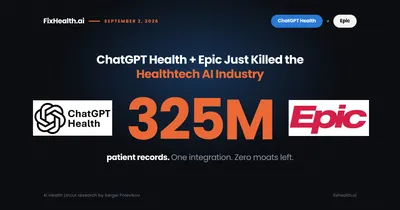
ChatGPT Health + Epic Integration Just Killed the Healthtech AI Industry
OpenAI's direct integration with Epic's electronic health records threatens to wipe out specialized healthcare AI startups. This consolidation means medical scribes and health-tech developers face immediate job market contraction.
Last scored March 14, 2026 · Based on BLS employment data and O*NET task analysis