Secretaries and Administrative Assistants, Except Legal, Medical, and Executive
Perform routine clerical and administrative functions such as drafting correspondence, scheduling appointments, organizing and maintaining paper and electronic files, or providing information to callers.
How AI Impacts Each Task
32 tasks analyzed
Use computers for various applications, such as database management or word processing.
Perform payroll functions, such as maintaining timekeeping information and processing and submitting payroll.
Answer telephones and give information to callers, take messages, or transfer calls to appropriate individuals.
Collect and deposit money into accounts, disburse funds from cash accounts to pay bills or invoices, keep records of collections and disbursements, and ensure accounts are balanced.
Create, maintain, and enter information into databases.
Set up and manage paper or electronic filing systems, recording information, updating paperwork, or maintaining documents, such as attendance records, correspondence, or other material.
Operate office equipment, such as fax machines, copiers, or phone systems and arrange for repairs when equipment malfunctions.
Greet visitors or callers and handle their inquiries or direct them to the appropriate persons according to their needs.
Complete forms in accordance with company procedures.
Maintain scheduling and event calendars.
Schedule and confirm appointments for clients, customers, or supervisors.
Make copies of correspondence or other printed material.
Locate and attach appropriate files to incoming correspondence requiring replies.
Operate electronic mail systems and coordinate the flow of information, internally or with other organizations.
Coordinate conferences, meetings, or special events, such as luncheons or graduation ceremonies.
Compose, type, and distribute meeting notes, routine correspondence, or reports, such as presentations or expense, statistical, or monthly reports.
Arrange conference, meeting, or travel reservations for office personnel.
Open, read, route, and distribute incoming mail or other materials and answer routine letters.
Provide services to customers, such as order placement or account information.
Review work done by others to check for correct spelling and grammar, ensure that company format policies are followed, and recommend revisions.
Conduct searches to find needed information, using such sources as the Internet.
Establish work procedures or schedules and keep track of the daily work of clerical staff.
Develop or maintain internal or external company Web sites.
Prepare and mail checks.
Manage projects or contribute to committee or team work.
Mail newsletters, promotional material, or other information.
Order and dispense supplies.
Learn to operate new office technologies as they are developed and implemented.
Supervise other clerical staff and provide training and orientation to new staff.
Train and assist staff with computer usage.
Prepare conference or event materials, such as flyers or invitations.
Take dictation in shorthand or by machine and transcribe information.
| Task | AI Capability | Risk | Time % | |
|---|---|---|---|---|
| Use computers for various applications, such as database management or word processing. | 45.43Observed | 67.4% | 5% | |
| Perform payroll functions, such as maintaining timekeeping information and processing and submitting payroll. | 92Estimated | 86.0% | 2% | |
| Answer telephones and give information to callers, take messages, or transfer calls to appropriate individuals. | 35.9Observed | 63.6% | 4% | |
| Collect and deposit money into accounts, disburse funds from cash accounts to pay bills or invoices, keep records of collections and disbursements, and ensure accounts are balanced. | 38.22Observed | 64.5% | 2% | |
| Create, maintain, and enter information into databases. | 46.85Observed | 67.9% | 3% | |
| Set up and manage paper or electronic filing systems, recording information, updating paperwork, or maintaining documents, such as attendance records, correspondence, or other material. | 87Estimated | 84.0% | 3% | |
| Operate office equipment, such as fax machines, copiers, or phone systems and arrange for repairs when equipment malfunctions. | 40Estimated | 49.0% | 2% | |
| Greet visitors or callers and handle their inquiries or direct them to the appropriate persons according to their needs. | 45.8Observed | 33.3% | 3% | |
| Complete forms in accordance with company procedures. | 92Estimated | 86.0% | 2% | |
| Maintain scheduling and event calendars. | 92Estimated | 86.0% | 2% | |
| Schedule and confirm appointments for clients, customers, or supervisors. | 39.85Observed | 65.1% | 2% | |
| Make copies of correspondence or other printed material. | 40Estimated | 49.0% | 1% | |
| Locate and attach appropriate files to incoming correspondence requiring replies. | 46.05Observed | 67.6% | 1% | |
| Operate electronic mail systems and coordinate the flow of information, internally or with other organizations. | 92Estimated | 86.0% | 2% | |
| Coordinate conferences, meetings, or special events, such as luncheons or graduation ceremonies. | 50Estimated | 47.0% | 2% | |
| Compose, type, and distribute meeting notes, routine correspondence, or reports, such as presentations or expense, statistical, or monthly reports. | 52.23Observed | 70.1% | 2% | |
| Arrange conference, meeting, or travel reservations for office personnel. | 54.17Observed | 70.9% | 2% | |
| Open, read, route, and distribute incoming mail or other materials and answer routine letters. | 77Estimated | 80.0% | 2% | |
| Provide services to customers, such as order placement or account information. | 45Observed | 67.2% | 2% | |
| Review work done by others to check for correct spelling and grammar, ensure that company format policies are followed, and recommend revisions. | 97Estimated | 88.0% | 1% | |
| Conduct searches to find needed information, using such sources as the Internet. | 41.93Observed | 66.0% | 2% | |
| Establish work procedures or schedules and keep track of the daily work of clerical staff. | 50Estimated | 47.0% | 1% | |
| Develop or maintain internal or external company Web sites. | 56.83Observed | 49.7% | 1% | |
| Prepare and mail checks. | 77Estimated | 80.0% | 1% | |
| Manage projects or contribute to committee or team work. | 35Estimated | 29.0% | 1% | |
| Mail newsletters, promotional material, or other information. | 40Estimated | 49.0% | 1% | |
| Order and dispense supplies. | 72Estimated | 78.0% | 1% | |
| Learn to operate new office technologies as they are developed and implemented. | 40Estimated | 43.0% | 1% | |
| Supervise other clerical staff and provide training and orientation to new staff. | 20Estimated | 23.0% | 1% | |
| Train and assist staff with computer usage. | 40Estimated | 31.0% | 1% | |
| Prepare conference or event materials, such as flyers or invitations. | 92Estimated | 86.0% | 33% | |
| Take dictation in shorthand or by machine and transcribe information. | 35.6Observed | 63.4% | 18% |
Skill Impact Analysis
AI-Vulnerable Skills (6)
High reliance on Reading Comprehension is a risk area. Consider developing complementary AI-resistant skills to maintain value.
High reliance on Information Ordering is a risk area. Consider developing complementary AI-resistant skills to maintain value.
Mathematics is AI-vulnerable but has moderate importance in this role. AI tools may handle this; focus on higher-value skills.
Memorization is AI-vulnerable but has moderate importance in this role. AI tools may handle this; focus on higher-value skills.
Mathematics is AI-vulnerable but has moderate importance in this role. AI tools may handle this; focus on higher-value skills.
Programming is AI-vulnerable but has moderate importance in this role. AI tools may handle this; focus on higher-value skills.
AI-Resistant Skills (11)
Adaptability/Flexibility is AI-resistant — strengthening this skill provides durable career protection.
Service Orientation is AI-resistant — strengthening this skill provides durable career protection.
Leadership is AI-resistant — strengthening this skill provides durable career protection.
Coordination is AI-resistant — strengthening this skill provides durable career protection.
Social Perceptiveness is AI-resistant — strengthening this skill provides durable career protection.
Complex Problem Solving is AI-resistant — strengthening this skill provides durable career protection.
Negotiation is AI-resistant — strengthening this skill provides durable career protection.
Persuasion is AI-resistant — strengthening this skill provides durable career protection.
Recommended Courses
Courses matched to Secretaries and Administrative Assistants, Except Legal, Medical, and Executive skill gaps, ranked by relevance to your displacement risk profile.
Get personalized recommendations. Answer a few questions about your experience and skills to get course suggestions tailored specifically to you.
Upskill to Reduce Risk
Courses addressing your most AI-vulnerable skills
SQL Fundamentals Skill Track
by DataCamp
Estimated Impact
AI-Augmentation Tools
Learn to work alongside AI and boost your productivity
Creative Writing Specialization
by Wesleyan University
Estimated Impact
Strengthen Your Edge
Double down on skills AI can't replicate
Inspired Leadership Through Emotional Intelligence
by Case Western Reserve University
Estimated Impact
We may earn a commission when you enroll through our links, at no extra cost to you. This helps fund the Takeover Tracker.
Risk reduction and salary impact are estimates based on skill gap analysis, course relevance, and labor market data. Actual results vary by individual circumstance.
Alternate Career Paths
See all transitionsAdvertising and Promotions Managers
31%Higher risk than 43% of other occupations
Bill and Account Collectors
40%Median salary: $46,040
Higher risk than 81% of other occupations
Chief Executives
26%Higher risk than 23% of other occupations
Computer and Information Systems Managers
31%Higher risk than 45% of other occupations
Executive Secretaries and Executive Administrative Assistants
46%Median salary: $74,260
Higher risk than 93% of other occupations
General and Operations Managers
28%Higher risk than 29% of other occupations
Hotel, Motel, and Resort Desk Clerks
41%Median salary: $34,270
Higher risk than 84% of other occupations
Insurance Policy Processing Clerks
52%Median salary: $48,450
Higher risk than 98% of other occupations
Interviewers, Except Eligibility and Loan
46%Median salary: $43,830
Higher risk than 92% of other occupations
Library Assistants, Clerical
47%Median salary: $36,010
Higher risk than 95% of other occupations
License Clerks
51%Median salary: $47,700
Higher risk than 98% of other occupations
Marketing Managers
30%Higher risk than 38% of other occupations
Medical Records and Health Information Technicians
48%Higher risk than 96% of other occupations
Office Clerks, General
47%Median salary: $43,630
Higher risk than 95% of other occupations
Receptionists and Information Clerks
41%Median salary: $37,230
Higher risk than 82% of other occupations
Sales Managers
25%Higher risk than 20% of other occupations
Score History
Risk score over 2 scoring runs
overall change
Education & Training
Percentage of workers at each education and training level
Education Level
Prior Experience Needed
Work experience required to enter this job
Training Provided After Hiring
How long it typically takes to learn on the job
Related News
Recent articles about AI affecting this occupation

New AI assistants threaten to automate everyday administrative tasks
Tech companies are deploying autonomous agents capable of executing daily workflows rather than just answering questions. This shift threatens to displace roles focused on scheduling, data entry, and basic administration.
New AI Model Automates Routine Computer Tasks, Threatening Desk Jobs
A newly released AI system is designed to autonomously navigate and operate computer interfaces just like a human user. This development brings us one step closer to the total automation of routine administrative and data-entry roles.
Employers Project Revenue Growth Without Adding Headcount
Office and clerical staffing dropped 7% while industrial staffing grew 12%. Companies are increasingly planning to scale their revenue without hiring new workers, signaling a shift toward automation-driven productivity.

AI Integration Threatens to Disrupt Auto Dealership Software Roles
The automotive retail sector is bracing for a software overhaul as AI agents begin automating dealership operations and sales workflows. This shift threatens traditional administrative roles while creating demand for tech-savvy staff.
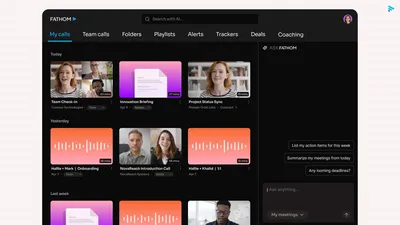
Superhuman acquires YC-backed notetaker Fathom as productivity platforms push for agentic work
Email client Superhuman is buying AI meeting assistant Fathom to build autonomous agents for its users. The integration aims to automate routine administrative tasks for over 400,000 active users, reducing the need for human assistants.
Last scored March 14, 2026 · Based on BLS employment data and O*NET task analysis